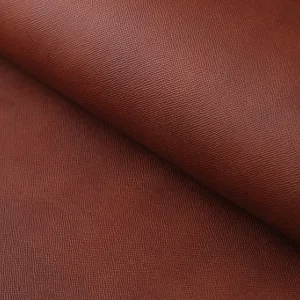
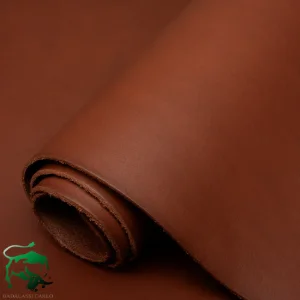
What is cowhide?
Large hides, dense and thick fiber structure, high tensile strength. Suitable for belts, bases, bag straps, and structured goods. The large hide size lets you cut long patterns without piecing.
What is cowhide
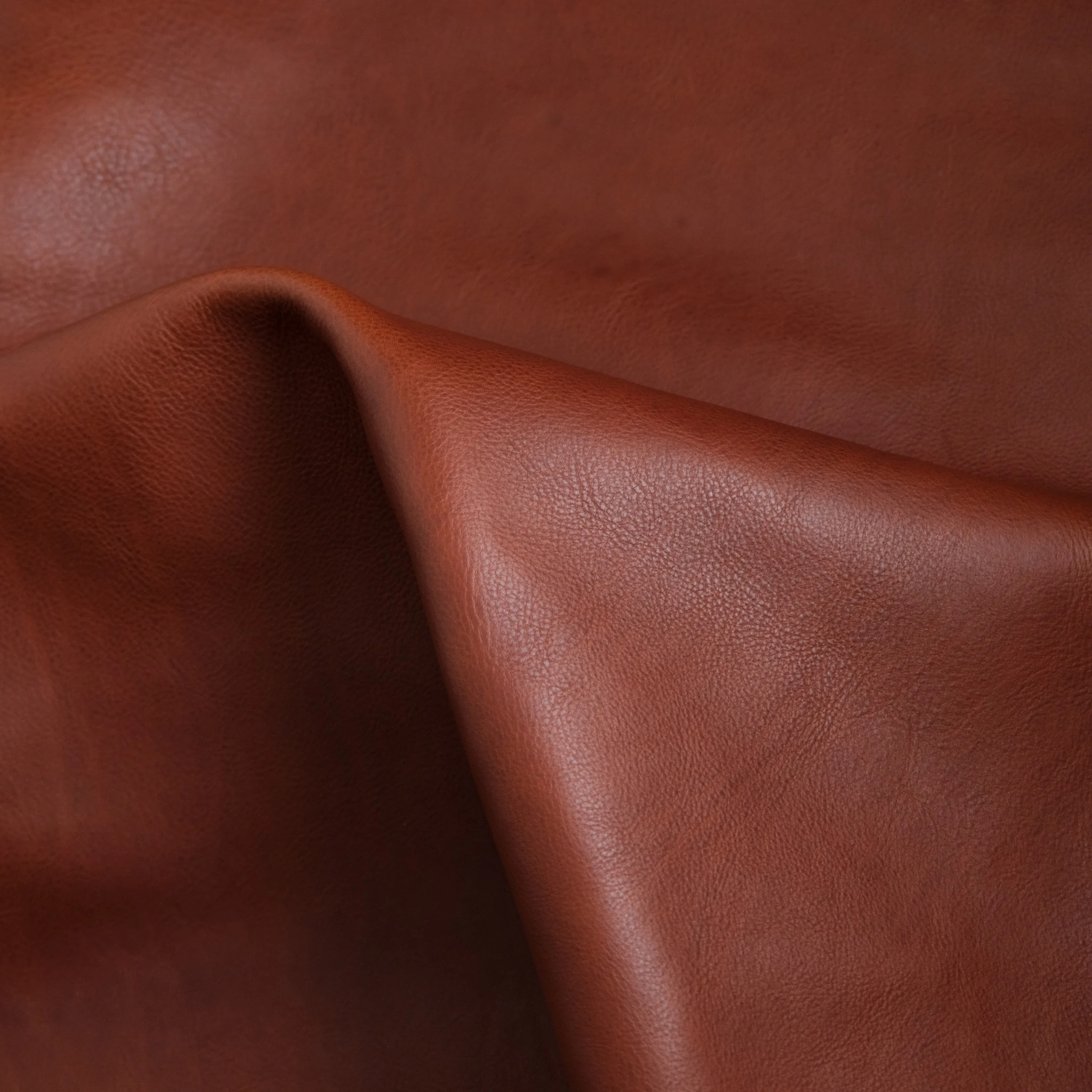
Cowhide is leather from adult cattle, distinct from calfskin — which is leather from young cattle. The fundamental difference lies in the leather fibers. Adult cattle usually yield thicker leather with better load-bearing strength (especially the bend area), although the fibers are not as fine and tight as calfskin. You feel it as soon as you pick it up: the hide is hefty in hand, stands firm, and does not flop over like soft calf leathers.
Along with that comes a large hide. This is the most practical reason to choose cowhide: you can cut long pieces — a belt strap, a full-length bag strap — without having to piece them together. Joining leather at a load-bearing point creates a weak spot that eventually busts stitches over time; and an exposed seam cheapens the finished piece. For long items, a large hide solves both issues.
Trade-offs compared to calfskin
Gaining firmness and large hide size means sacrificing smoothness. Cowhide has coarser fibers than calfskin, a surface with more natural marks — scars, insect bites, neck wrinkles — and because it is thick, folding thin edges is more difficult. If you want a neat fold, you must skive the edge first, adding an extra step.
In return, the price per pia (30×30 cm) is usually lower than calfskin. In our warehouse, cowhide leathers are concentrated at 365,000–450,000 VND/pia, while calfskin reaches 500,000–580,000 VND. If your piece needs durability and size more than a smooth surface, cowhide is a sensible financial choice.
Choosing by tanning method
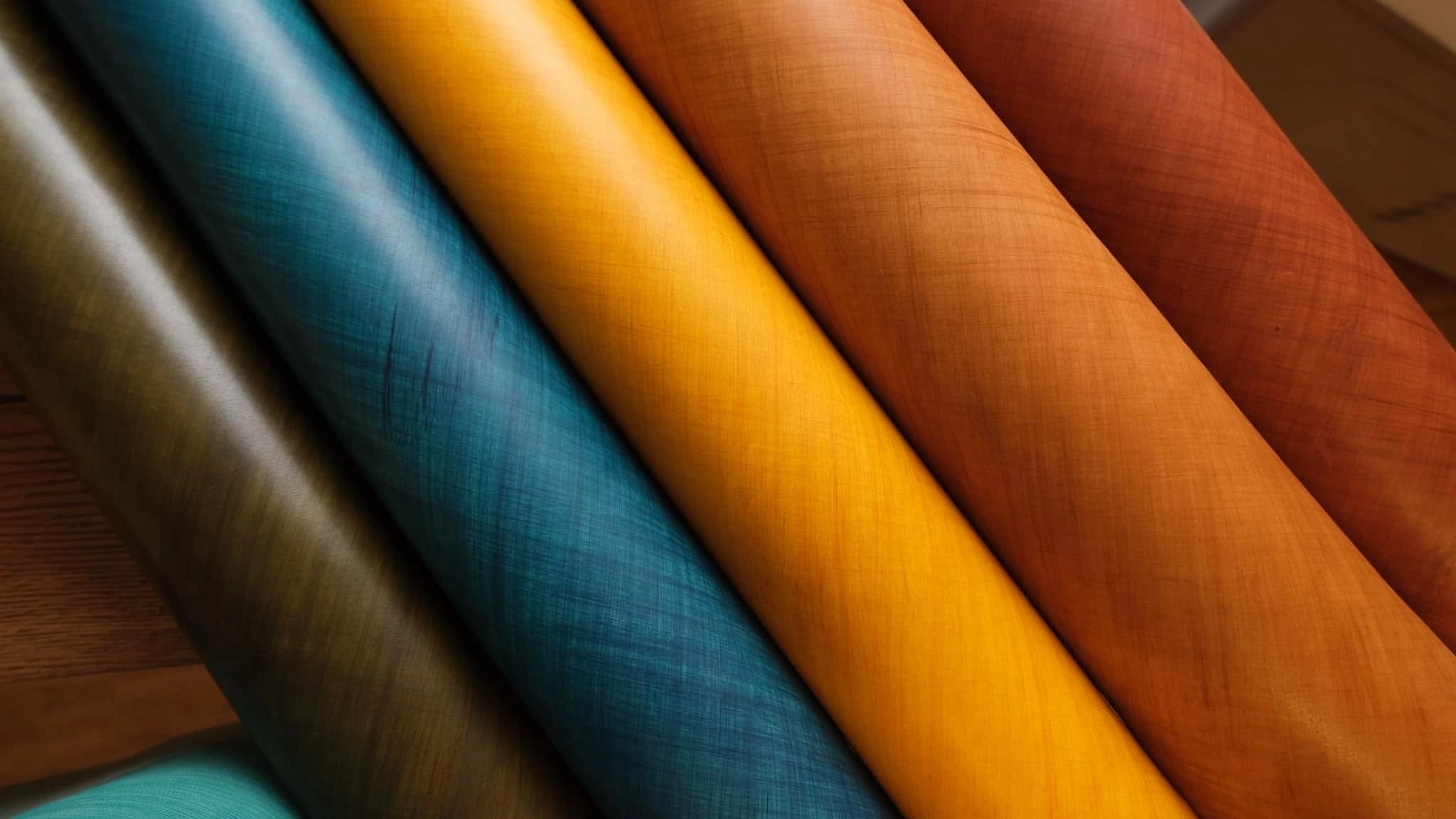
Cowhide in our warehouse is divided by tanning method, and the tanning method determines the character of the hide even more than the animal itself.
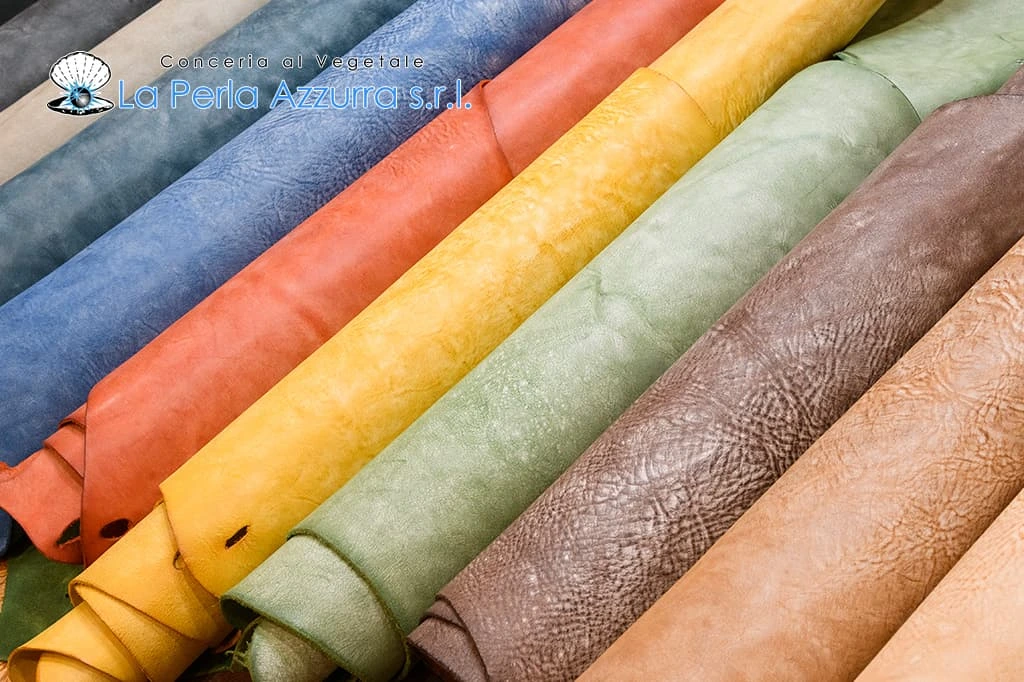
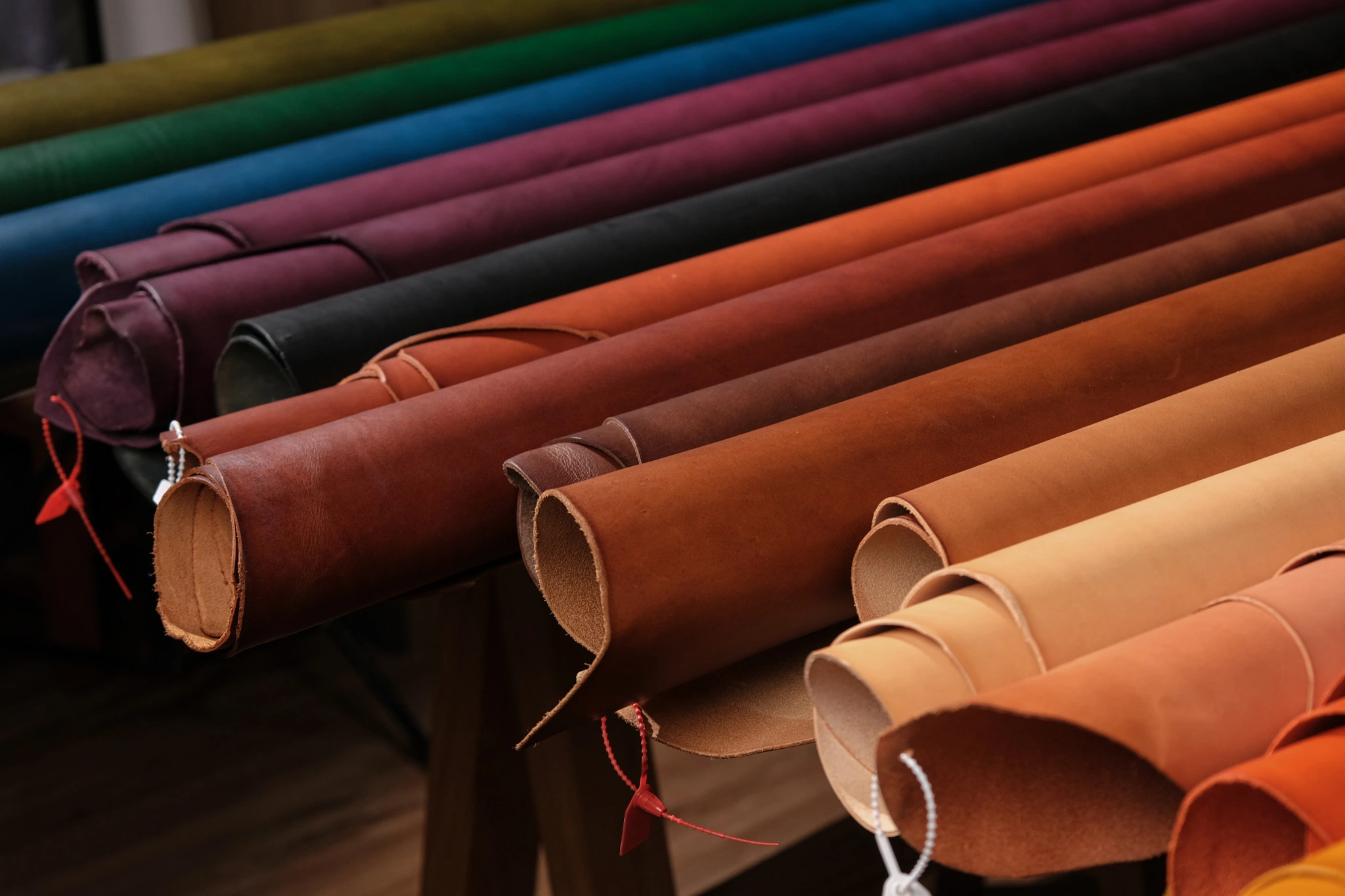
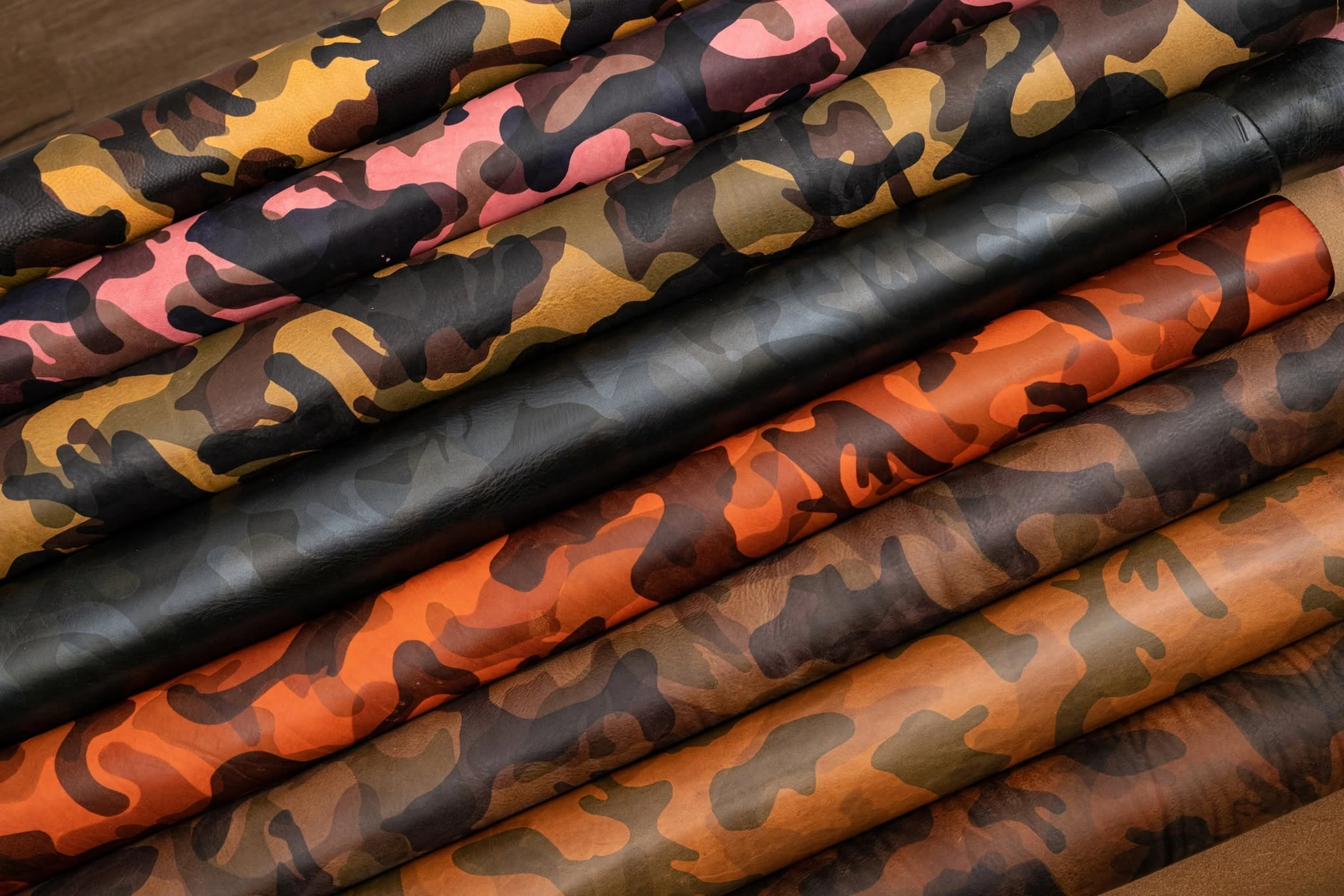
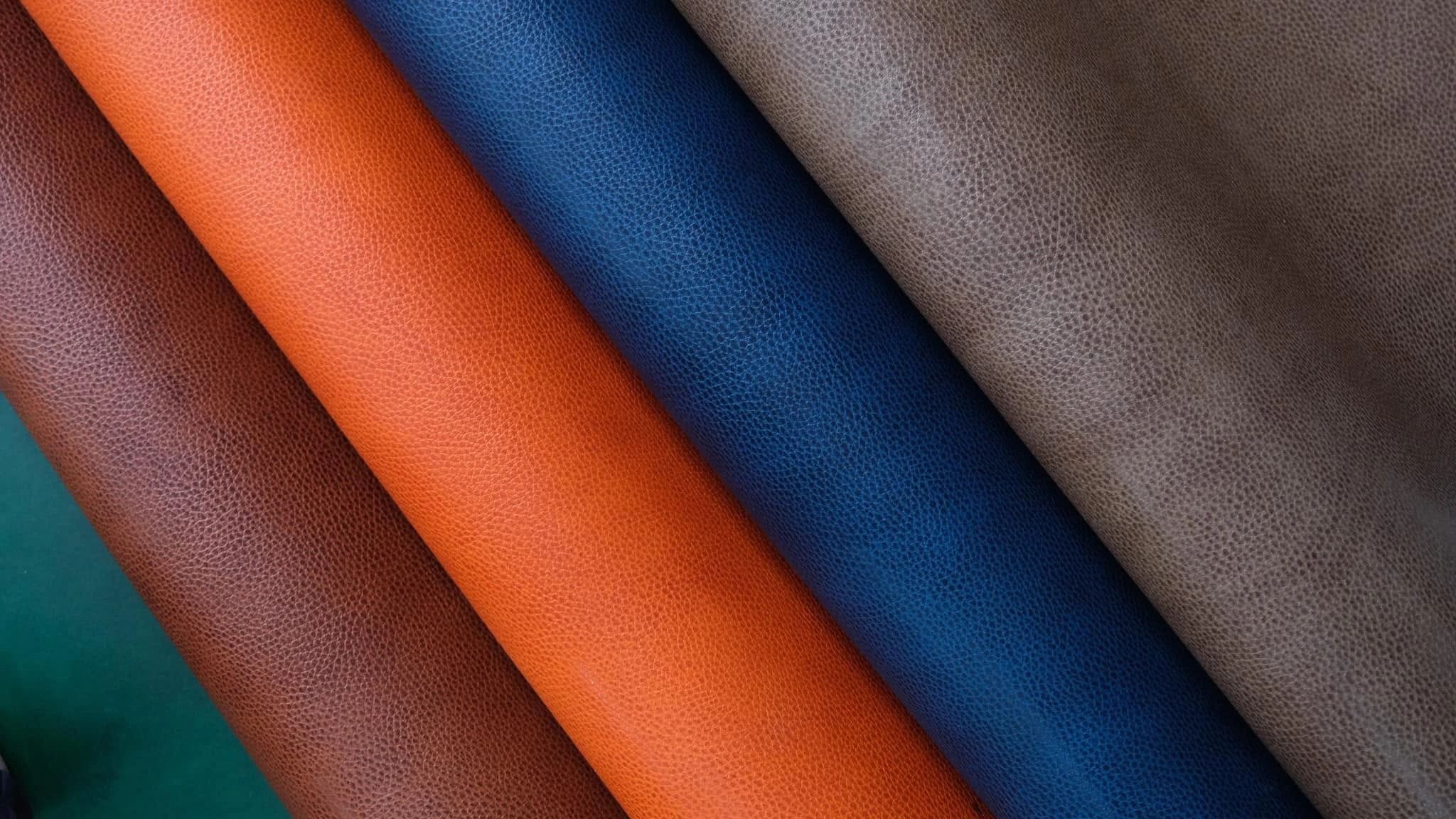
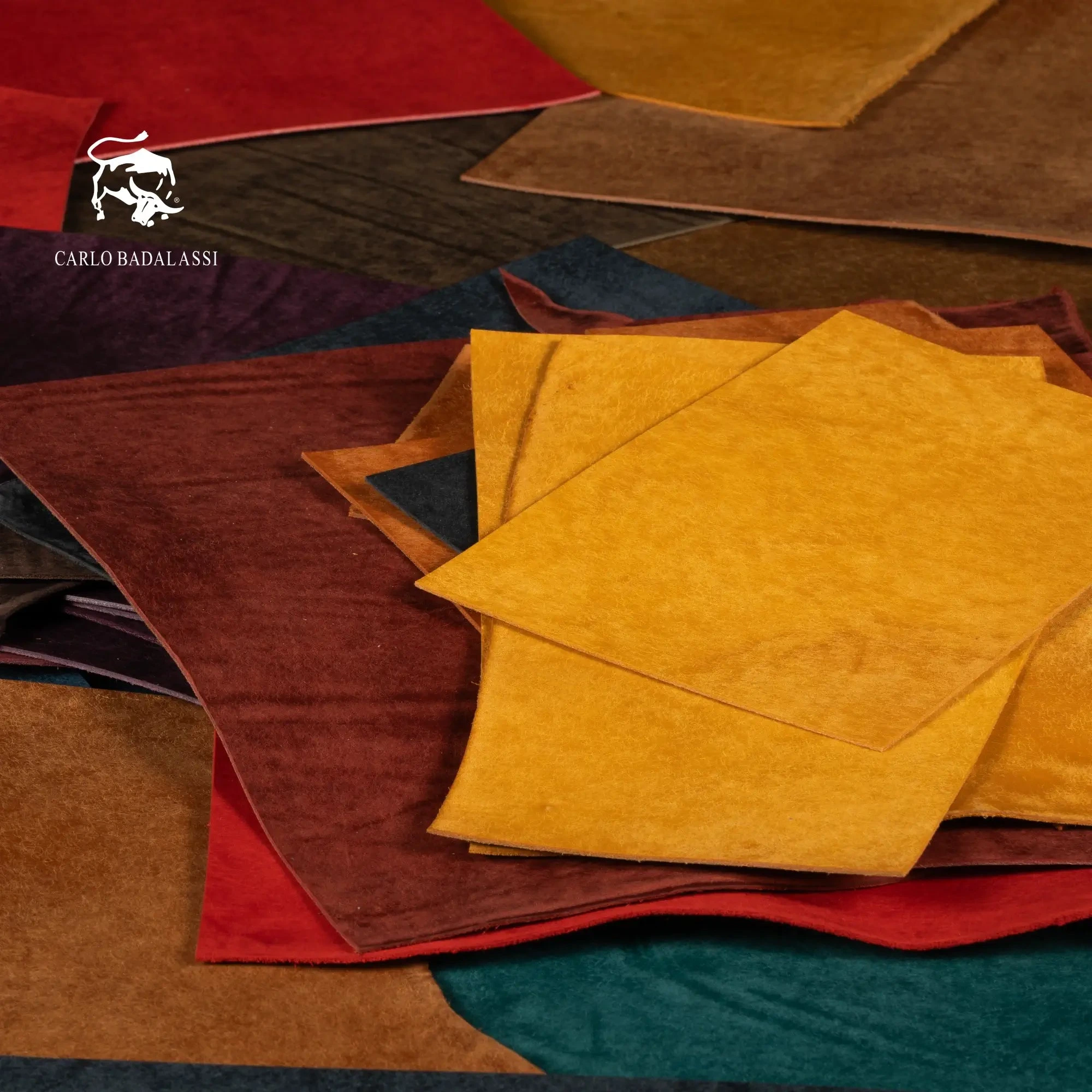
- The vegetable-tanned group — darkens over time with use, mostly holds its shape. This is where you find Pueblo, Minerva, Minerva Box (milled leather, moderately supple, with a pebbled grain), Waxy, Buttero, Dollaro, Hatch, Alaska, Camouflage (milled leather, soft to medium), and Mozart.
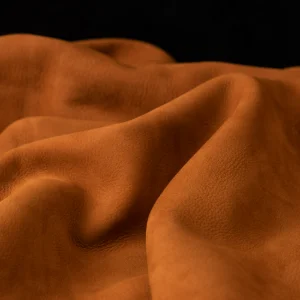
- The chrome-tanned group — softer and drapier, with stable color, develops less patina than veg-tan leather. Here are Nubuck (taurillon leather — cattle around 1 year old), Velvet, and Taurillon Clemence.
Identifying and working with cowhide
- Does not stretch lengthwise — a mandatory requirement for belts. Soft leather stretches out with use, the strap lengthens, and the buckle holes shift.
- Mostly holds structure if it is vegetable-tanned (except for soft milled leather lines); the chrome-tanned group is softer and drapier, requiring lining to hold its shape.
- Requires a truly sharp blade. At thicknesses of 2 mm and up, a dull blade tears instead of cuts, fraying the edges.
What it is suited for
Belts, bag bottoms, bag straps, bag bodies, large wallets — items that need structure or load-bearing strength. Not suitable for multi-compartment wallets that require folding multiple layers: those areas will be bulky and the wallet will not close shut. Leave those items to thin calfskin or goatskin.
How does cowhide differ from calfskin?
The difference lies in the fibers and the hides. Adult cattle yield large hides, thickness, and load-bearing strength — suitable for belts, straps, and bag bottoms. Calf yields finer and tighter fibers, thin hides, and fewer marks — suitable for wallets and small goods that need a clean surface. Which one you choose depends on whether the item you make needs durability or surface appearance.
Does cowhide darken over time?
It depends on the tanning method. Unfinished vegetable-tanned versions darken gradually and develop a patina with use, while chrome-tanned versions maintain virtually the same color throughout their lifespan. If you want to see the leather change color with handling, choose the veg-tan group; if you want long-term color stability, choose the chrome-tanned group.
Available cowhide