What is vegetable-tanned leather?
Vegetable-tanned (Veg-tan)
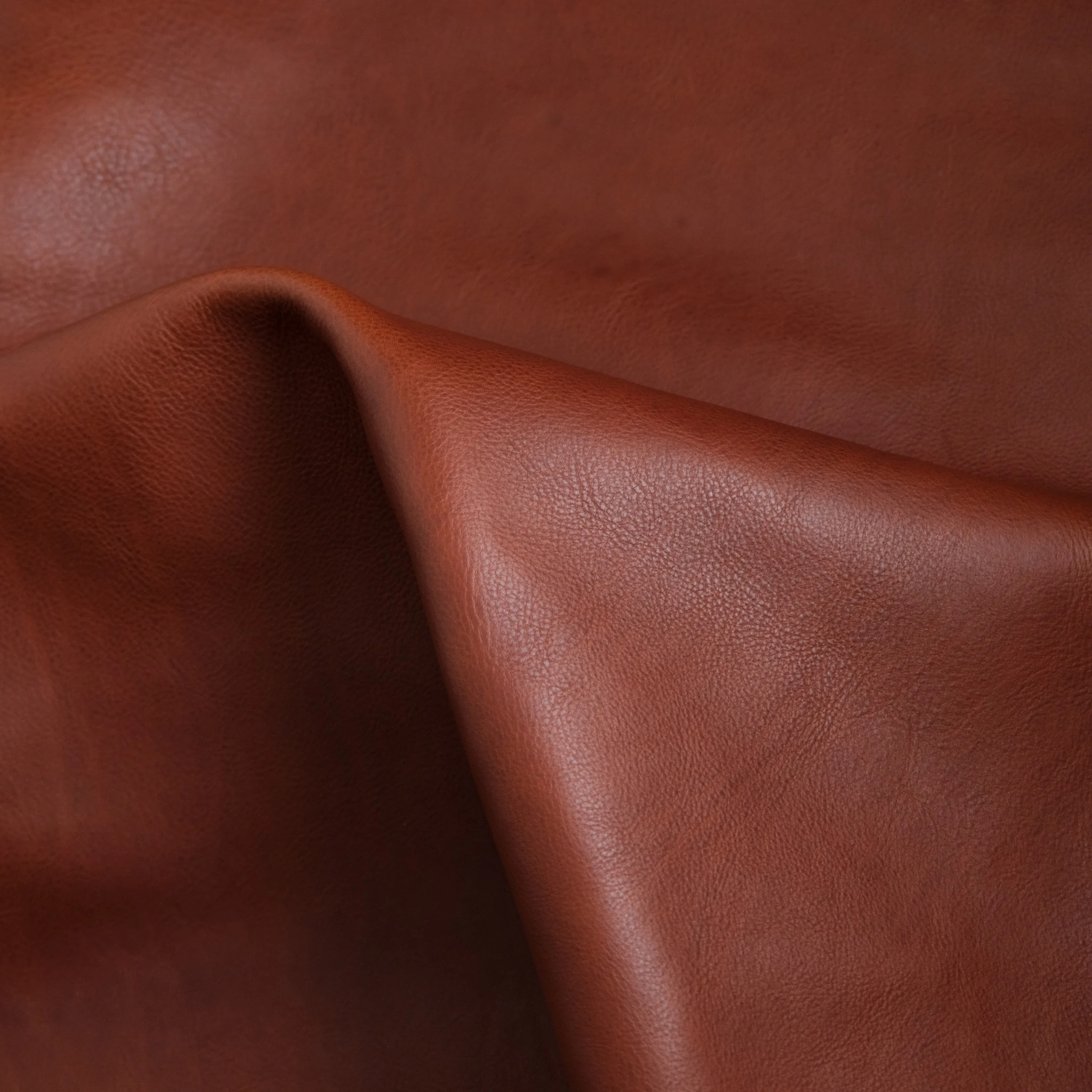
Tanned with plant tannins over several weeks. Holds its shape, left unfinished, darkens and gains a sheen with use — scratches become part of the surface.
What is vegetable-tanned (veg-tan) leather
Tanning turns animal hides from perishable raw material into something that lasts for decades. Vegetable tanning — veg-tan — does this using tannins extracted from plants: bark, wood, and leaves. Hides sit in tannin vats for weeks, gradually moving from low to high concentrations.
Compared to chrome tanning, which takes only about a day in drums, this is a massive difference in production time — and the main reason veg-tan leather costs more. In return, you get a leather character that chrome-tanned leather cannot replicate.
What you get in return
- Holds its shape. Pick up the hide and it stands on its own, allowing you to craft items with crisp edges without stiffener reinforcement.
- Unfinished grain. The grain surface has no heavy pigment coat, revealing the genuine character of the hide.
- Develops patina over time. The irreplaceable quality: after a few months of use, it darkens and polishes in areas touched often, and scratches become part of the surface rather than damage. No chrome-tanned leather can do this.
- Easy to burnish and dye edges. Dense fibers mean edges absorb finish well and buff to a clean shine.
What to know beforehand
Unfinished veg-tan leather is prone to water staining, especially during the first few months: standing water drops leave permanent dark rings. If making gifts, make sure to inform the user. And leather only develops a patina when used — sitting in a closet produces no patina; it needs hand sweat, sunlight, and friction.
Which veg-tan leather line to choose
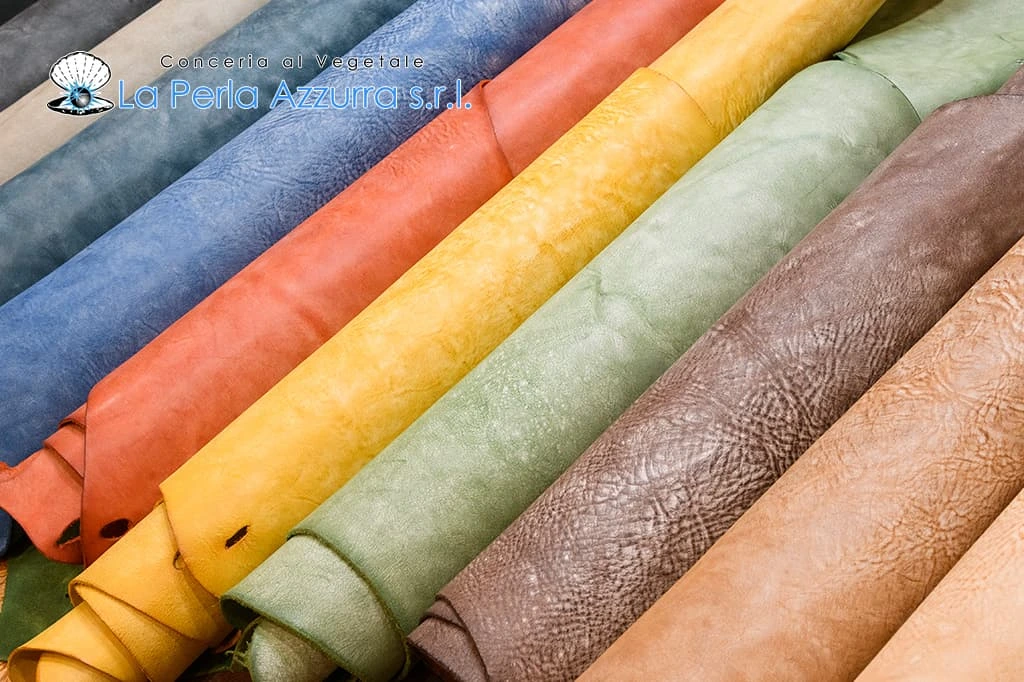
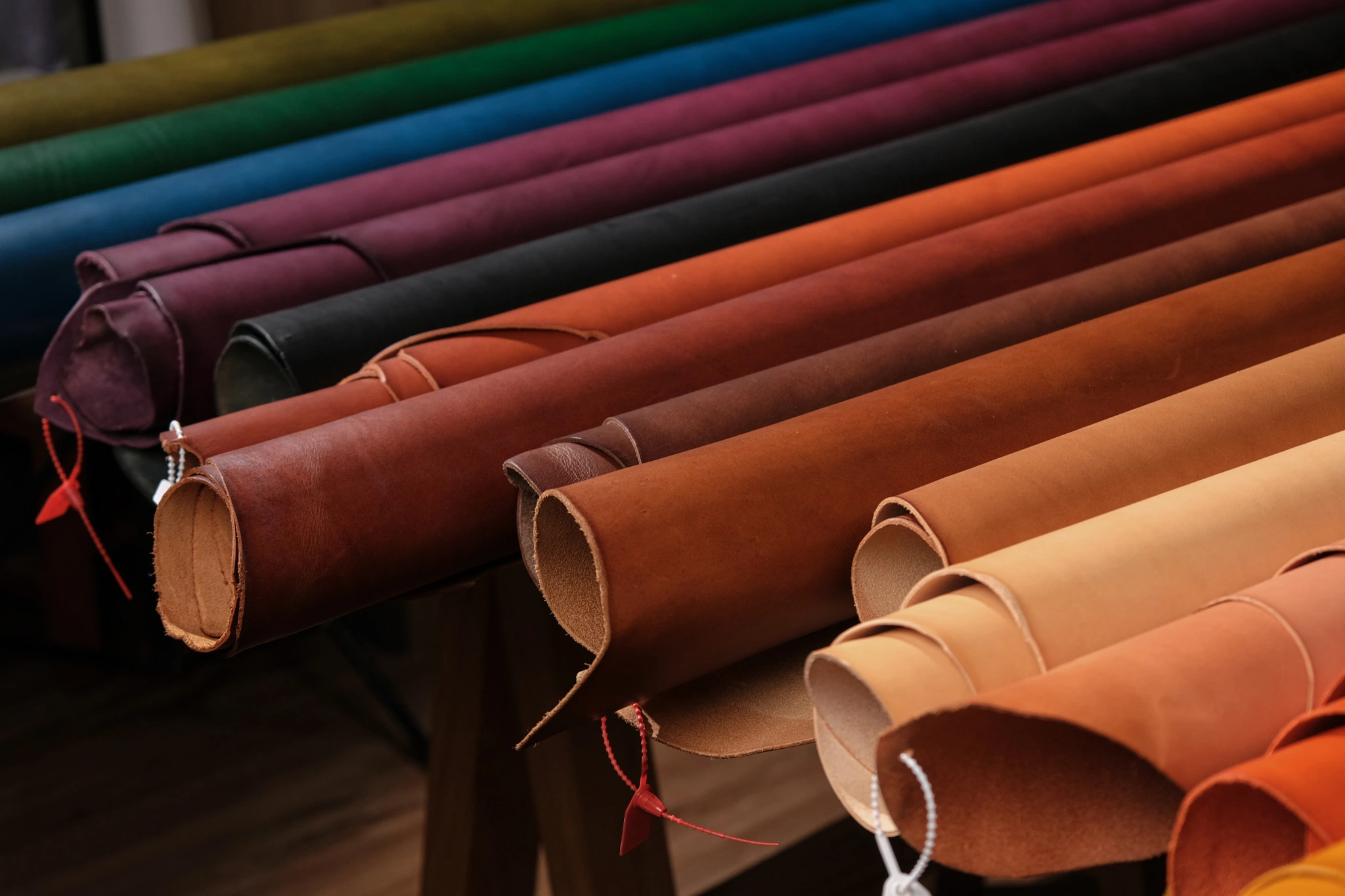
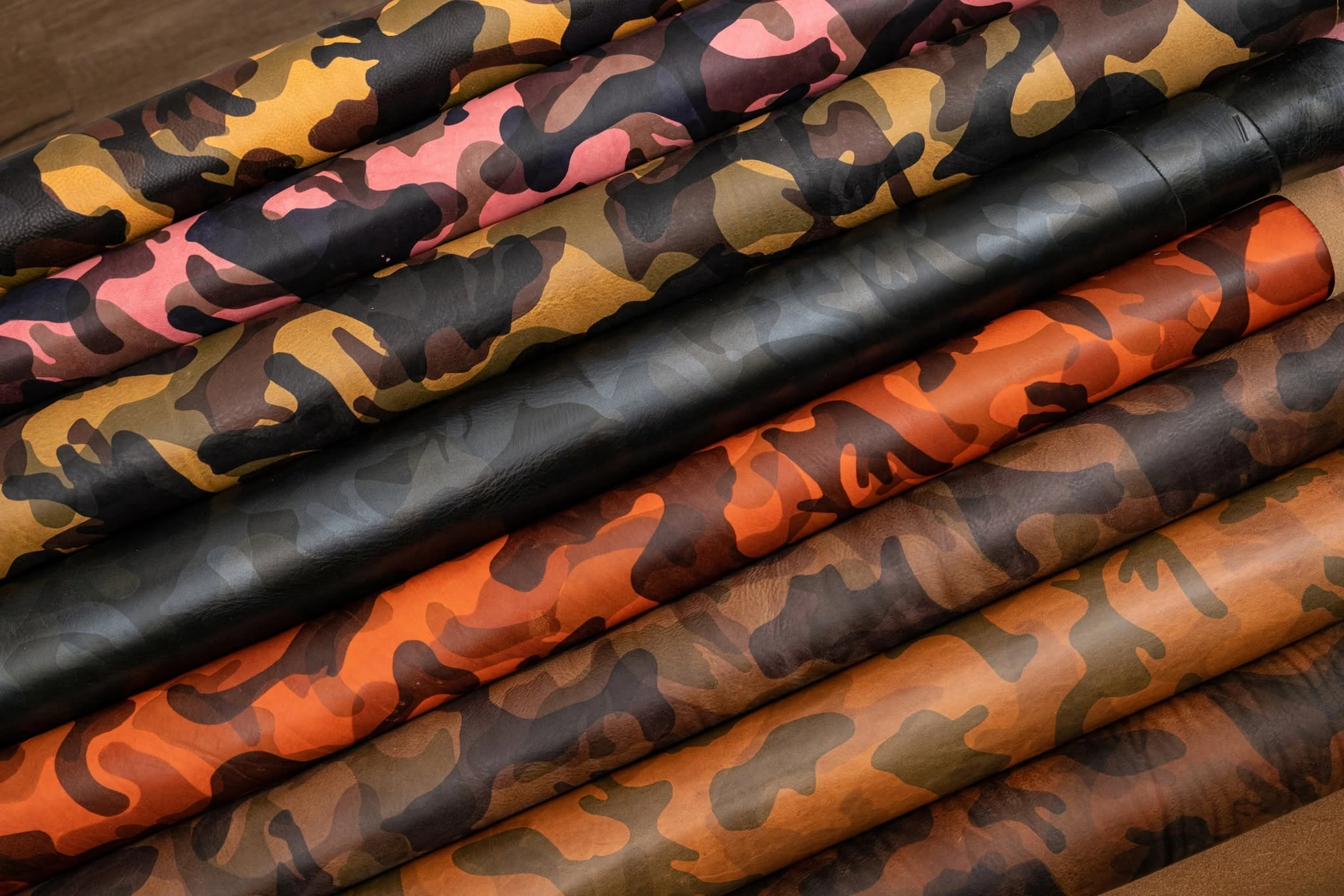
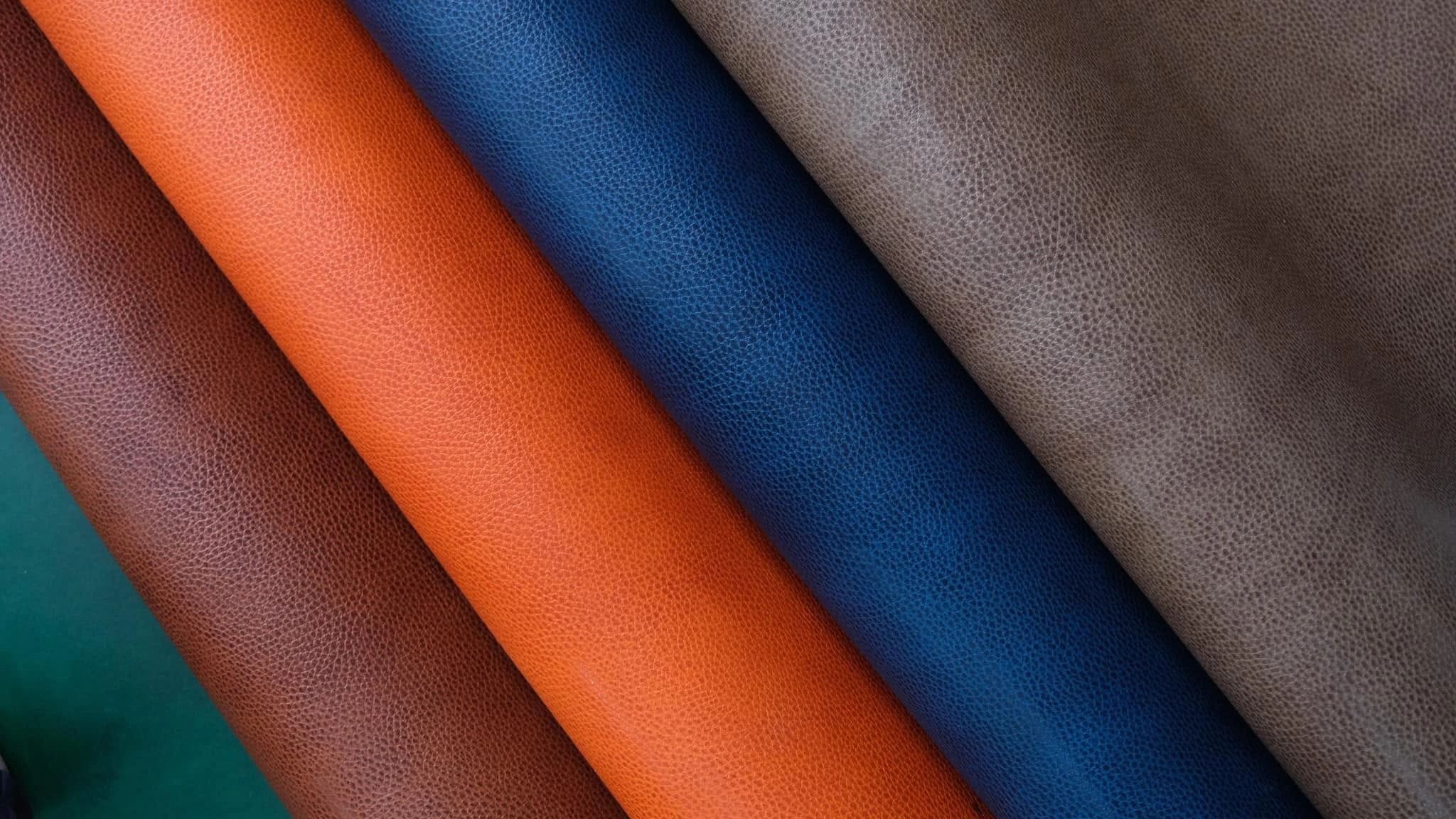
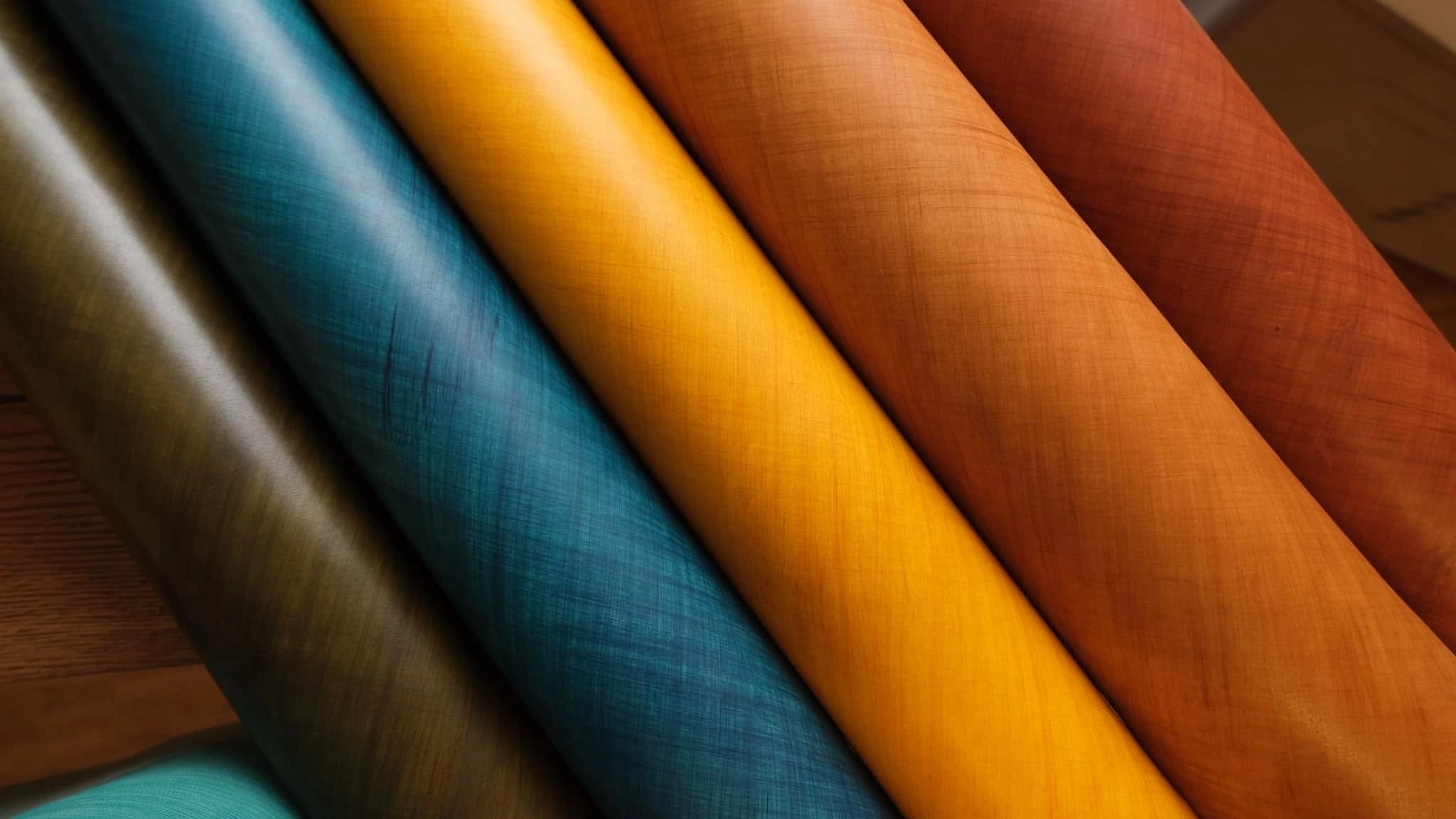
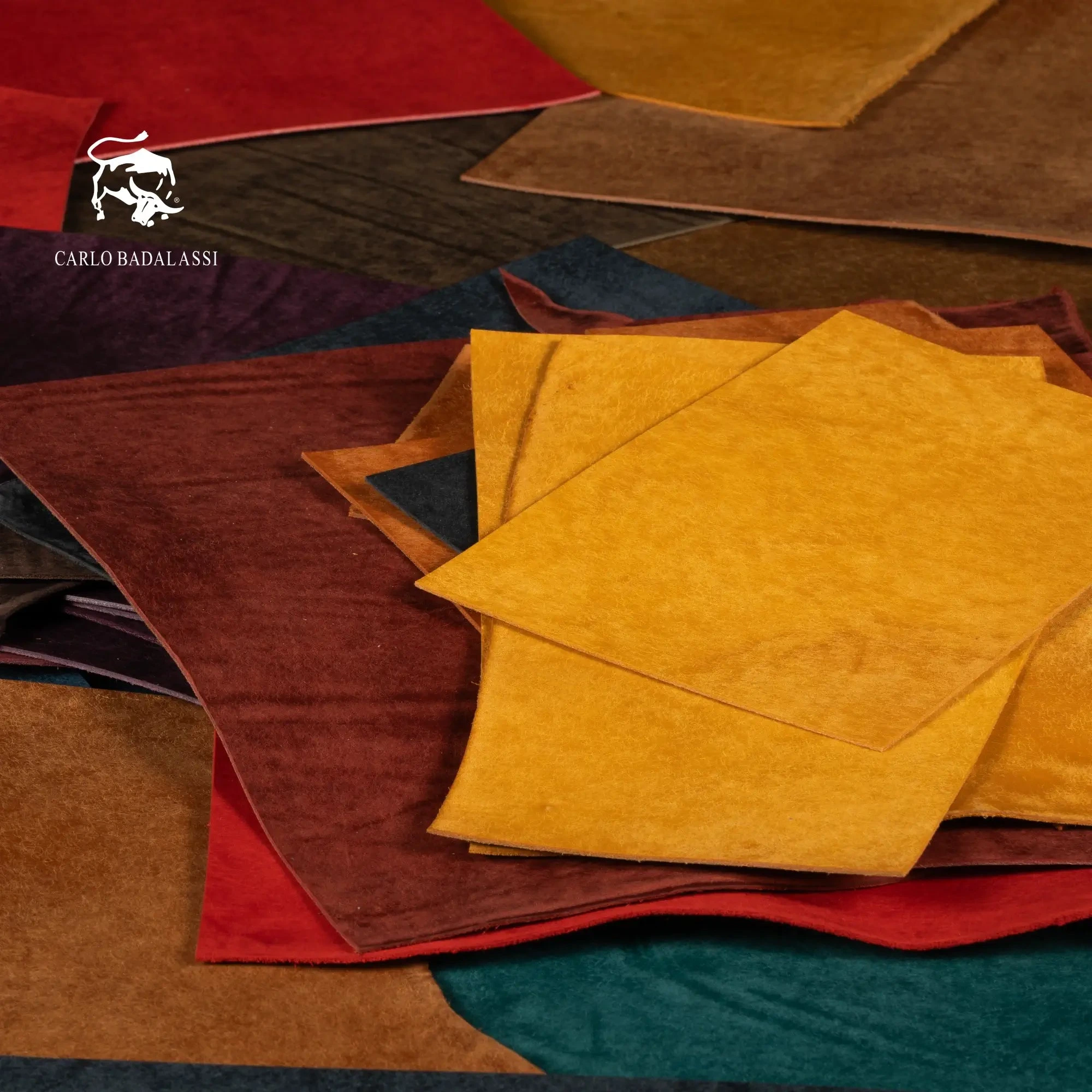
Smooth grain to see the patina process clearly: Buttero (firm temper, easy for practice), Minerva (oil-rich, has pull-up). Crosshatch color effect: Mozart (belts, notebook covers). The most unique texture is Pueblo — rough like short-nap suede, flattening and glossing over with use. Pebbled grain to conceal scratches: Minerva Box and Dollaro. Soft from the start: Alaska. Thickest for belts and straps: Hatch (2.2 mm). More water-resistant thanks to wax impregnation: Waxy. Unique multi-tone mottled finish: Camouflage.
How does veg-tan differ from chrome-tanned and combination-tanned leather?
Compared to chrome-tanned leather: veg-tan develops patina better and holds its shape, but is water-sensitive and stiffer; chrome is soft, color-stable, and moisture-resistant, but does not patina. Compared to combination-tanned leather: combination tanning takes elements of both — it still develops a mild patina while being less sensitive to water. If you want the most pronounced patina, choose pure veg-tan. Most veg-tan lines in stock are cowhide.
Does veg-tan leather absorb water?
Yes, and this is the most critical point to remember. Unfinished veg-tan leather absorbs water, especially in the first few months: pooled water leaves dark ring marks that are hard to remove. Wax-infused leather lines like Waxy resist water noticeably better; otherwise, avoid water exposure until the hide has darkened and developed a natural protective layer.
How long does it take for veg-tan leather to develop a patina?
A few weeks of regular use already warms up the tone; after a few months, the color visibly contrasts with untouched areas. The speed depends on the leather line (Pueblo, Minerva, and Waxy patina fastest), handling frequency, hand sweat, and the original color. Leather kept in a closet without use barely changes — patina is the result of use.
Vegetable-tanned leather lines available