What is goatskin?
Lightweight and thin, yet surprisingly tough thanks to tightly interwoven fibers. Natural fine pebbled grain, soft in the hand. Commonly used for linings, slim wallets, and items that need to be light yet durable.
What is goatskin
Goatskin is the lightest and thinnest leather in stock, yet surprisingly tough. The reason lies in its fiber structure: goatskin fibers are tightly interwoven and crisscrossed rather than layered in parallel like cowhide, giving it much better tensile strength relative to its thickness. Thin without being weak — that is why makers keep goatskin in their workshop even though it is selective with projects.
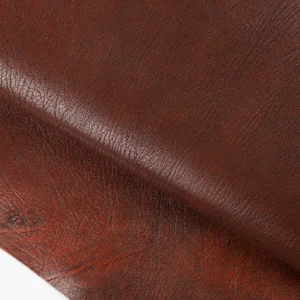
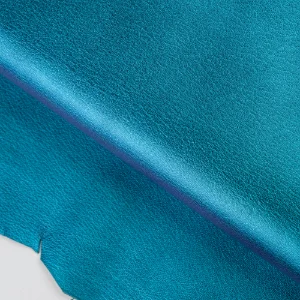
The surface features a natural fine pebbled grain — the animal's own grain, not embossed — so each hide is unique. It feels soft to the touch, smooth but not slick.
Why leathercrafters need goatskin
The specific challenge is multi-pocket wallets. The thickest point of a wallet can require folding four to five layers of leather; made with cowhide, that spot bulks up and the wallet will not close shut. Goatskin at around 1.2 mm allows multiple layers of folding while keeping the finished piece flat. This is something cowhide or thick calfskin cannot do.
The second reason is edge folding. The fine pebbled grain stays intact after rounding the edge, so borders turn out clean instead of cracking along the fold line. On small goods with many folded edges, that is the difference between a clean piece and a ragged one.
Trade-offs
Thin and soft, it does not hold structure and cannot bear load. Do not make belts or bag straps from goatskin — that is cowhide's job. If you want an item to hold structure, you must use a stiffener or reinforcement; the hide itself will drape around whatever is inside.
Three goatskin lines in stock
All three come from Alran, a French tannery specializing in goatskin.
- Chevre PatNat is vegetable-tanned, aniline-dyed, and finished with a black patina.
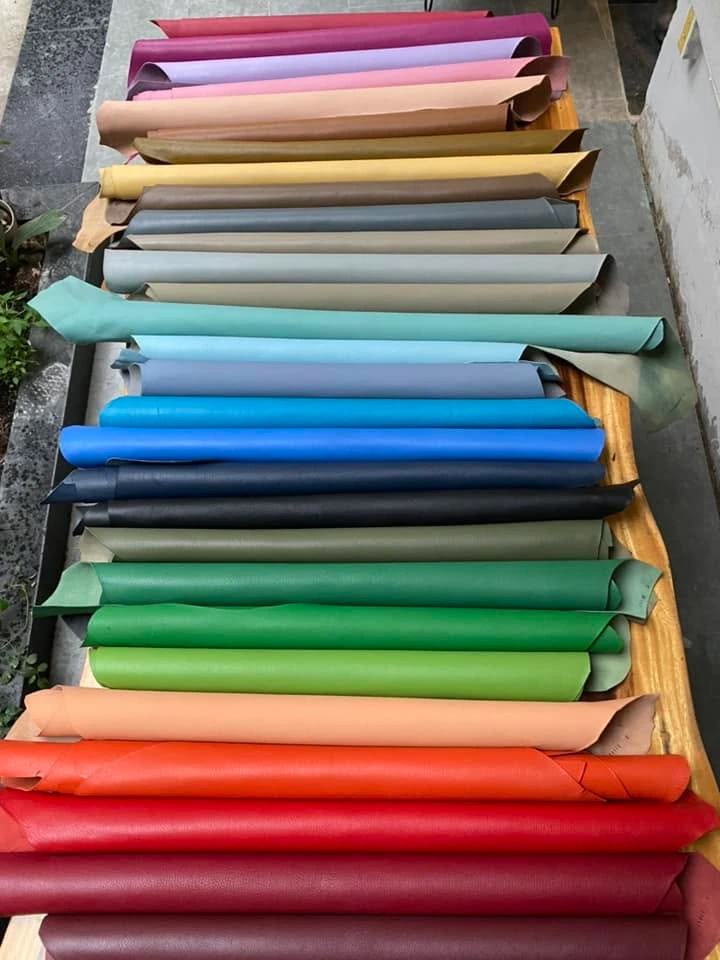
- Chevre Sully is combination-tanned, Sully Tuning is vegetable-tanned, and both are pigment-finished, so the color is stable.
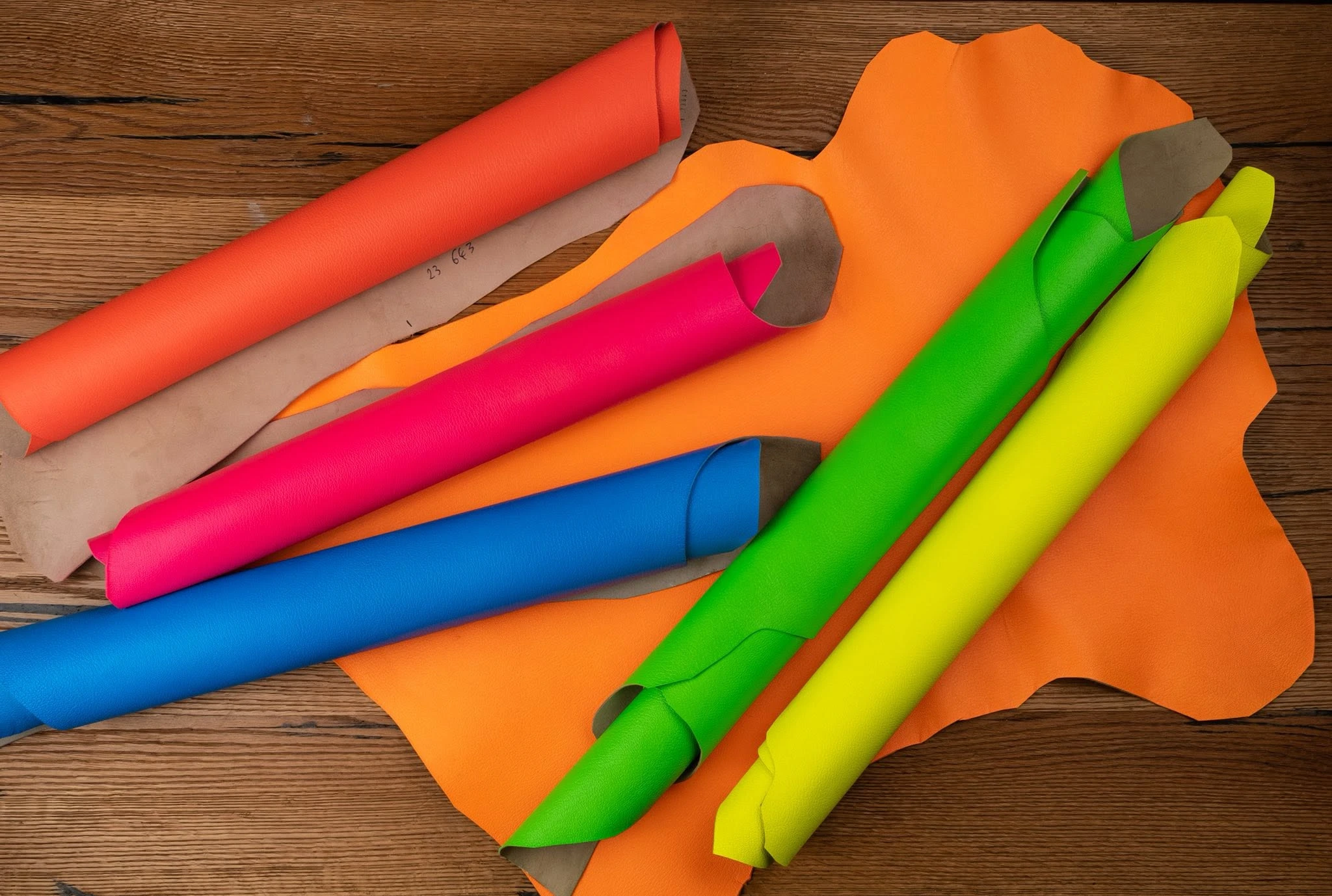
- Chèvre Sully Fluo is dyed in vivid tones, often used as a contrasting inner lining in wallets.
Which goatskin line to choose for what
If you want vegetable-tanned leather with a black patina, choose Chevre PatNat. If you want the color to stay true to when you bought it and stable, choose Chevre Sully or Sully Tuning. If you need a pop of vivid color for an inner lining or an accent, Chèvre Sully Fluo handles that. All three are equally light and thin, differing in tannage and color.
Suitable uses
Slim wallets, cardholders, multi-pocket wallets, linings, notebook covers — places that need to be lightweight and low-bulk. Do not force goatskin into load-bearing items or projects that need to hold structure without reinforcement.
Is goatskin durable when it is this thin?
Much more durable than it looks. Goatskin fibers are crisscrossed, giving it significantly better tensile strength for its thickness; that is why it can make multi-pocket wallets while remaining tough. What it cannot do is handle the sustained pull on a belt or hold an upright shape — that is a matter of thickness and temper, not tensile toughness.
Is goatskin easy to edge-fold and hand-stitch?
Easy, and that is its strength. Being thin, folding multiple layers still stays flat; with its fine grain, rounded edges do not crack; and hand-stitching yields clean thread lines. For makers of small multi-pocket wallets, goatskin is practically the default choice.