
What is Alran Chevre Sully goatskin? Semi-vegetable tanned goatskin for multi-pocket wallets
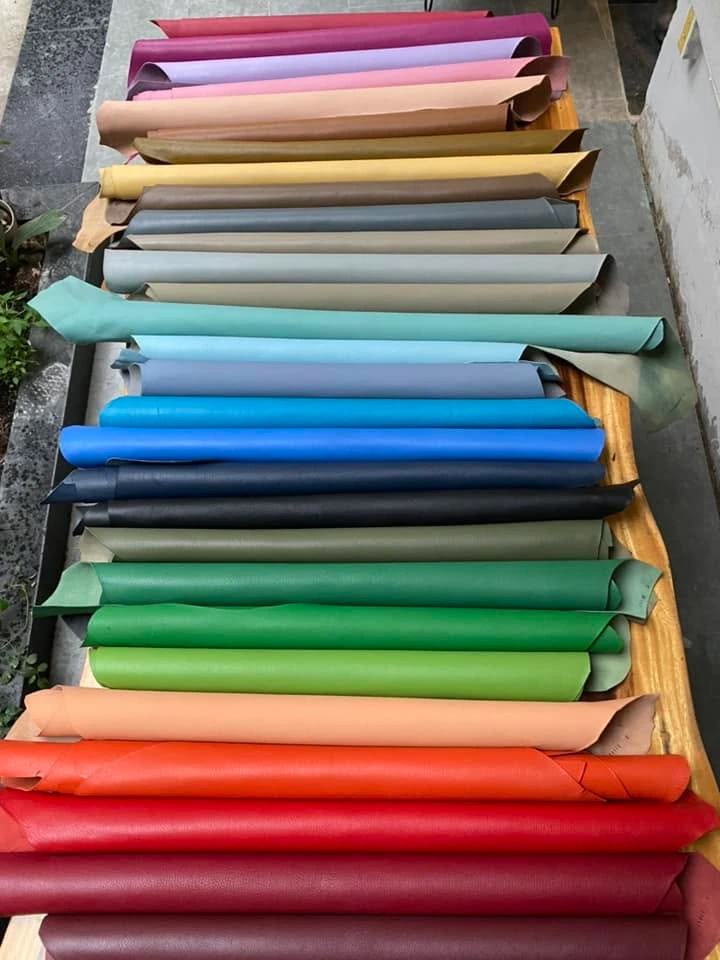
Alran Chevre Sully goatskin: semi-vegetable tanned, soft yet tough, colorfast—the standard choice for multi-pocket wallets. Even grain, though hide edges have looser grain zones. Browse hides at Kit Leather.
Chevre Sully is a semi-vegetable tanned goatskin from the Alran tannery (France), featuring a fine pebbled grain that is soft to the touch yet tough. Chèvre means goat in French—this is genuine goatskin, not embossed cowhide. The thin hides allow multiple layers to be folded without adding bulk: the benchmark leather for multi-pocket wallets.
Chevre means goatskin, not cowhide
Let's clarify this first, as it is the most common point of confusion: Chevre Sully is goatskin. Not cowhide, nor cowhide embossed to look like goatskin.
The fine grain of goatskin is easy to mistake for an embossed pattern in photos. Handling the hide in person is completely different: tiny grain pebbles of varied sizes nestle together, denser in some spots and sparser in others, because this grain is grown naturally, not stamped with a plate. The hide is also lighter and thinner than cowhide of the same area, folding softly without cowhide's structural stiffness.
Alran: French goatskin tannery since 1903
Alran is located in Mazamet, in the Tarn department of southern France, nestled in the Montagne Noire. Alran was established in 1903; today the tannery specializes in and is best known for goatskin. The French call this craft mégissier—a tanner of goat and sheepskins—a distinct trade separate from bovine leather tanning.
Alran holds the Entreprise du Patrimoine Vivant label, a French state recognition awarded to firms preserving artisanal heritage. On their spec sheet, Alran clearly states that Sully is designed for leather goods, small leather goods, and watch straps.
Alran does not offer just one generic goatskin either: each leather line has its own spec sheet detailing the tanning method, thickness, and average size. Sully lists 1.1–1.3 mm and combination tanning—using both methods, hence semi-vegetable tanned. Those are tannery specs; the exact thickness of a specific hide in stock is stated on that hide's product page.
Alran grain is consistent, but every hide has looser grain zones
Alran's spec sheet describes Sully as having an even crispé grain. That is true—with an added nuance that only those handling full hides know.
The grain is even throughout the center of the hide. Toward the outer edges, the texture shifts slightly: the pebbles become sparser and fainter, the temper softer and spongier, with more stretch when pulled. Leathercrafters call this the loose grain area, and the closer to the belly, the looser it gets.
Why knowing this matters: place exterior pattern pieces on the center of the hide, where the grain is firm and uniform; reserve looser zones for interior pockets, linings, and concealed reinforcement—places where no one inspects the grain. If you cut six card slots from opposite ends of the hide, assembling them will reveal two different surface textures. Buyers of pre-cut panels avoid this issue, but they also do not get to choose.
Why leathercrafters favor Chevre Sully
- Solves the multi-pocket wallet dilemma: the corner of a six-slot card wallet stacks four to six layers of leather. With thin goatskin, that area stays flat and the wallet shuts tight; the same corner made of cowhide turns into a bulky block, causing the wallet to bulge and resist closing.
- Eliminates skiving steps: naturally thin, it usually requires no edge skiving—saving a time-consuming step that frequently ruins cut pieces.
- Soft yet tough: goatskin fibers are more tightly intertwined than cowhide of the same thickness, so wallet fold lines—the highest-stress area of a wallet—never become a weak point.
Drawbacks of Chevre Sully leather
Because Sully is thin and supple, it does not hold its shape. Projects requiring crisp edges and structured posture need another leather for the exterior—such as Box Calf leather on the outside and Sully lining the inside. This is not a flaw; it is simply role division.
Edges are difficult to round and burnish because the profile is so thin: at this thickness, there is barely anything to burnish. In practice, folding or binding edges instead of burnishing is the correct method for this leather, not a shortcut.
The third limitation is hide size. Alran's spec sheet lists the average Sully hide size at around 0.44 m². But your constraint is not total surface area—it is length: goats are small, so the hide is not long enough to cut a continuous belt strap or seamless bag strap. Watch straps work well—they are short.
How Chevre Sully differs from PatNat, Sully Tuning, and Sully Fluo
Alran offers an entire family of goatskins; the four leather lines below are the ones Kit carries. All share the same thin yet resilient goatskin character, differing only in surface finish and color.
- Chevre Sully—the baseline: semi-vegetable tanned, pigmented finish, soft hand feel, color stays virtually unchanged. Choose this when you want the leather to look exactly as it did when purchased.
- Chevre PatNat—aniline finish, not pigment-coated like Sully: a more natural surface that can develop patina over time, though water drops may leave stains.
- Sully Tuning—differs in its surface finish, and hides at Kit are standardized to 1.2 mm. Choose this when you need a guaranteed thickness for layering.
- Chèvre Sully Fluo—the same grain surface in vivid fluorescent tones. Picked for color: contrasting linings, accent details.
What is Alran Chevre Sully goatskin suitable for?
Four applications, ranked in order of what this leather excels at:
- Multi-pocket wallets—its specialty: folding multiple layers without bulk.
- Linings and interior pockets for items with a thicker calfskin or cowhide exterior shell.
- Soft notebook covers—reputable distributors also note that Sully works well for bookbinding.
- Watch straps—Alran specifically classifies Sully for watch straps. Note that a single 1.1–1.3 mm layer is thin, so straps are typically lined with a second layer or padded with reinforcement for adequate thickness and body.
Caring for hides and finished items
Unused hides: roll loosely with the grain facing outward; do not fold—creases on thin goatskin leave permanent marks. Store in a cool, dry place away from sunlight and heat, and never stack heavy objects on top. For light-colored hides, interleave with unprinted paper to prevent color transfer from surfaces.
Finished items: wiping dust with a soft, dry cloth is sufficient for most cases. For stubborn dirt, use a well-wrung damp cloth, wipe gently, and let it dry naturally—do not saturate the leather, and never dry it with a hair dryer or near a heat source. Sully already has a pigmented finish, so it does not need periodic oil conditioning like unfinished veg-tan; applying oil will only make the surface greasy and discolor it. Avoid alcohol and harsh detergents.
Is Chevre Sully leather suitable for multi-pocket wallets?
Extremely suitable—virtually the default choice. The hardest part of this wallet style is the corners where multiple layers stack: thick leather prevents the wallet from closing flush, whereas thin goatskin keeps those spots flat, allows needles to pierce cleanly, and avoids bulky edges. Furthermore, being soft yet tough, everyday folds hold up for years without failing. If you plan to try just one goatskin leather line, try it on this exact project.
Does Chevre Sully develop a patina?
No, and that is intentional. Alran lists Sully as a pigmented leather produced by combination tanning—the color sits in a finishing topcoat, so hand oils do not penetrate to darken the leather like unfinished veg-tan. What evolves over time is softness, not color. This is good when you or your customer choose a specific color and expect it to stay consistent. If you want leather that can develop patina over time, consider Chevre PatNat.
Is goatskin this thin actually durable?
Yes, it is durable. What determines durability is not thickness but fiber structure, and goatskin fibers are tightly interlocked, resisting tension and folding far better than their appearance suggests. A Sully wallet opened and closed daily for years will not crack or tear along the crease. Thinness only means it will not maintain rigid structure—that is a question of temper and shape, not durability.
Choosing & buying Chevre Sully leather at Kit Leather
Kit sells Chevre Sully leather by the individual hide—each hide comes from a different goat, allowing you to inspect the exact area, color, and grain pattern before deciding. Click View available Chevre Sully hides → to select your hide. If you are unsure how much leather you need, or which hide has the tightest grain for an exterior panel, message Kit on Zalo and we will check the hides for you.