
Which leather should you choose for wallets? Pick by the wallet style you plan to make
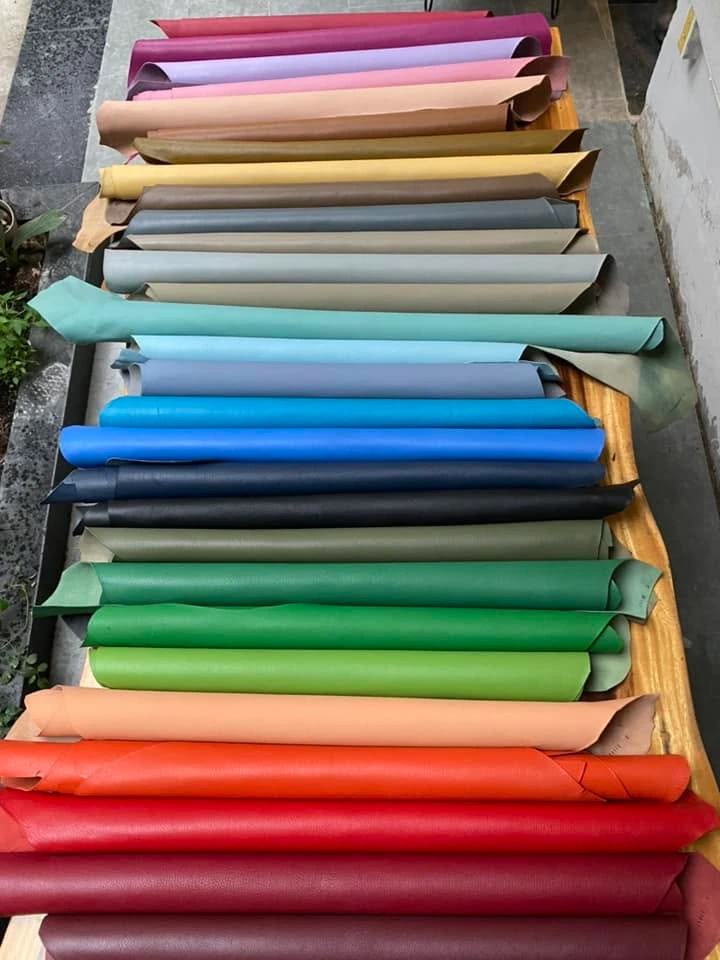
Multi-pocket wallets call for thin yet resilient goatskin; cardholders that hide scratches need embossed calfskin; wallets that develop a patina need veg-tan leather. Choose by wallet style, browse hides at Kit Leather.
For wallets with many compartments, choose goatskin that is thin yet tough; for wallets with few compartments where you want a refined look that hides scratches, choose calfskin; if you want to watch the wallet darken gradually under your hands, choose vegetable-tanned leather. In this article, Kit organizes inventory by the wallet style you plan to make, rather than by leather name.
Before choosing leather, settle three questions
These three questions settle almost everything.
- How many compartments? Count the overlapping layers of leather at the corner of the card slots, do not count the number of compartments. That is the figure for choosing thickness.
- Static color or develops patina? Chrome-tanned leather keeps its color almost throughout its lifespan. Veg-tan leather darkens gradually from the user's hands, but in return, it takes marks.
- Are you a beginner or experienced? Leather that cuts cleanly shows you your mistakes. Soft, drapey leather hides mistakes, and hides progress along with them.
Wallets with many compartments and multiple folds: choose goatskin
The tricky part of a wallet does not lie in the exterior, but at the corner of the card slots. That is where the exterior, lining, pocket base, and several card pocket pieces overlap: four to six layers of leather at a single point.
Do the math: four layers of 1.2 mm leather yield about half a centimeter; four layers around 2.2 mm yield nearly a centimeter—enough for the wallet to bulk up and not close flat. Goatskin is naturally thin, so that area stays flat, the needle passes through easily, and you skip an edge skiving step.
Thin yet tough is where goatskin clearly excels: tightly intertwined fibers ensure that folds—the highest-load area of a wallet—do not become a weak point.
- Chevre Sully — semi-vegetable goatskin from Alran, color stays virtually unchanged. 43 colors in stock, the most among 27 lines: view Chevre Sully hides.
- Sully Tuning — the same goatskin, with hides at Kit standardized to 1.2 mm. Choose this when you need to know the thickness with certainty to calculate layers.
- Chevre PatNat — Alran's proprietary code, vegetable-tanned, aniline-finished with a black patina effect.
One thing to know before marking with chalk: every goatskin hide has loose grain areas along the edges and near the belly. Reserve those areas for linings, and keep the center of the hide for the exterior.
Slim wallets, card wallets, few compartments: choose calfskin
With fewer overlapping layers, the problem shifts: bulk is no longer the concern, but the leather surface is. A card wallet sits in a front pocket, rubbing against keys and phones every day—smooth leather shows scratches as bright lines, while pebbled grain scatters reflections so scuffs blend into the background.
- Epsom — chrome-tanned calfskin with an embossed fine-cross pattern, the most structured in the calfskin group, so wallet corners turn out square without stiffeners. 33 colors: view Epsom hides.
- Togo — raised pebbled grain, softer than Epsom, giving the wallet a softer feel in hand, but areas needing structure require reinforcement lining. 22 colors: view Togo hides.
- Caviar — uniform round pebbled grain, moderate temper, better suited for small leather goods than large bags. 6 colors: view Caviar hides.
All three lines are chrome-tanned: the color you choose today is the color three years later. And all share one rule during assembly—hot creasing flattens the grain, and once flattened it does not recover—so use a light hand when edge burnishing and pressing creases.
Want the wallet to develop patina from your hands: choose veg-tan leather
What you are buying here is time. Veg-tan leather left natural has no topcoat, so oils from your hands penetrate and the leather darkens gradually; high-contact areas darken first.
The trade-off lies in the exact same mechanism: an open leather surface absorbs hand oils, but it also takes fingerprints, pen ink, and water. During the first few months, a water drop leaves a distinct water ring that fades as the whole piece darkens. If you have never used natural veg-tan leather, start with darker tones.
- Buttero — smooth surface, tight fibers, darkens slowly and evenly. 13 colors: view Buttero hides.
- Pueblo — rustic scuffed surface, undergoes the most dramatic surface change in the warehouse: areas where hands rest are burnished smooth and develop patina. 8 colors: view Pueblo hides.
The warehouse has a few other veg-tan lines that can make wallets—Minerva Box, Alaska, Camouflage—but in fewer colors.
What leather should you use for your first wallet?
Buttero, around 2.2 mm. Three reasons, all beginner-focused:
- Cuts cleanly without fraying: tight, uniform fibers ensure straight knife strokes and clean edges—you can immediately see where your cut drifted.
- Edges take finish easily: with no top finish, a few passes with a slicker produce a shine, and edge dye absorbs evenly. Edge burnishing is easiest to practice on this line.
- Holds shape without lining: eliminates an entire layer of technical complexity, and removes one place that could delaminate after a few years.
In return: at 2.2 mm you need a very sharp knife, and every overlapping piece must be skived thin. So for your first wallet, pick a pattern with few compartments, saving the ten-pocket design for a goatskin hide.
Which lines in stock should not be used for wallets?
Kit sells them, but does not sell them for this purpose.
- Hatch and Taiga, both 2.2 mm: Kit designates these two leathers for belts, straps, and rigid gussets. Four layers make nearly a centimeter, so the folded wallet will not close shut. At that same thickness, Buttero still works for wallets with few compartments because its smooth face skives easily.
- Taurillon Clemence — large grain: a single wallet piece holds only two or three pebbles, looking uneven rather than creating the intended texture. This leather line should be cut into large panels.
- Velvet (1.8 mm) and Nubuck — napped surface: no topcoat; Nubuck has been treated for water resistance by Carriat, but you should still spray an extra protective coat for heavily used items. Excess glue also permanently mats the nap.
What leather should you use for linings?
Thin goatskin, almost by default. The lining is the most overlapped layer, so every tenth of a millimeter here multiplies four or five times at the corner of the card slots.
- Tone-on-tone lining: Chevre Sully in the same color or one shade darker than the exterior; with 43 colors, you can almost always find matching tones.
- Contrasting lining: Chèvre Sully Fluo—the same goatskin surface in vivid tones. A subdued wallet exterior that opens to reveal a pop of color: view Sully Fluo hides.
A goatskin lining also rescues another situation: if the exterior is thick but the lining is thin, you can still keep a multi-compartment pattern, because the bulk is confined to a single layer.
How much leather does a wallet need?
Kit sells by the hide, measured in pia—one pia is 30×30 cm. There is no single figure for every wallet pattern, so measure directly on your own pattern:
- Count all pattern pieces, including the smallest piece and pieces that will be cut from lining leather.
- Box each piece in a rectangle and add up the areas of those rectangles—pieces never nest flush against each other on a hide.
- Add extra allowance for cutting mistakes and for exterior pieces that must come from the spine area.
Once you have the total pia, compare it with the area listed on each hide's page. Most beginners are surprised in the opposite direction: one hide is usually enough for multiple wallets.
How long does a genuine leather wallet last?
A wallet rarely fails from the leather surface. It fails at the fold and along the stitch line.
The fold should rely on tough leather—this is why goatskin appears in almost every multi-compartment wallet. Where layers overlap, skive them thin; do not force a needle through a block of leather: overstressed stitches are the first to give way. Get those two points right, and lasting for years is completely normal for a wallet.
Should you buy one hide or multiple colors?
When starting out, stick to one hide, one line: cut through that entire hide before switching lines. On the same hide, you encounter the spine, the belly, and the loose-grain areas—that is the fastest way to understand a leather type.
If making goods to sell, buy two hides for two distinct roles: one hide for the exterior, and one goatskin hide for the lining and card pockets. Keep in mind that two hides with the same color name are still not an exact match, which is most noticeable in veg-tan leather. If you need two identical wallets, cut them from the same hide.
Choosing and buying wallet leather at Kit Leather
Kit sells leather by the individual hide, measured in pia (30×30 cm)—each hide displays its own specific area, color, and price, so you can calculate your cutting layout before ordering. The three quickest paths: Chevre Sully goatskin for multi-compartment wallets →, Epsom calfskin for structured wallets →, Buttero cowhide for wallets that develop patina →. Not sure which line or how many pia your wallet pattern requires? Message us on Zalo with a photo of your pattern so Kit can help take a look.