
What Is Buttero Leather? Why It Should Be Your First Leather to Learn On
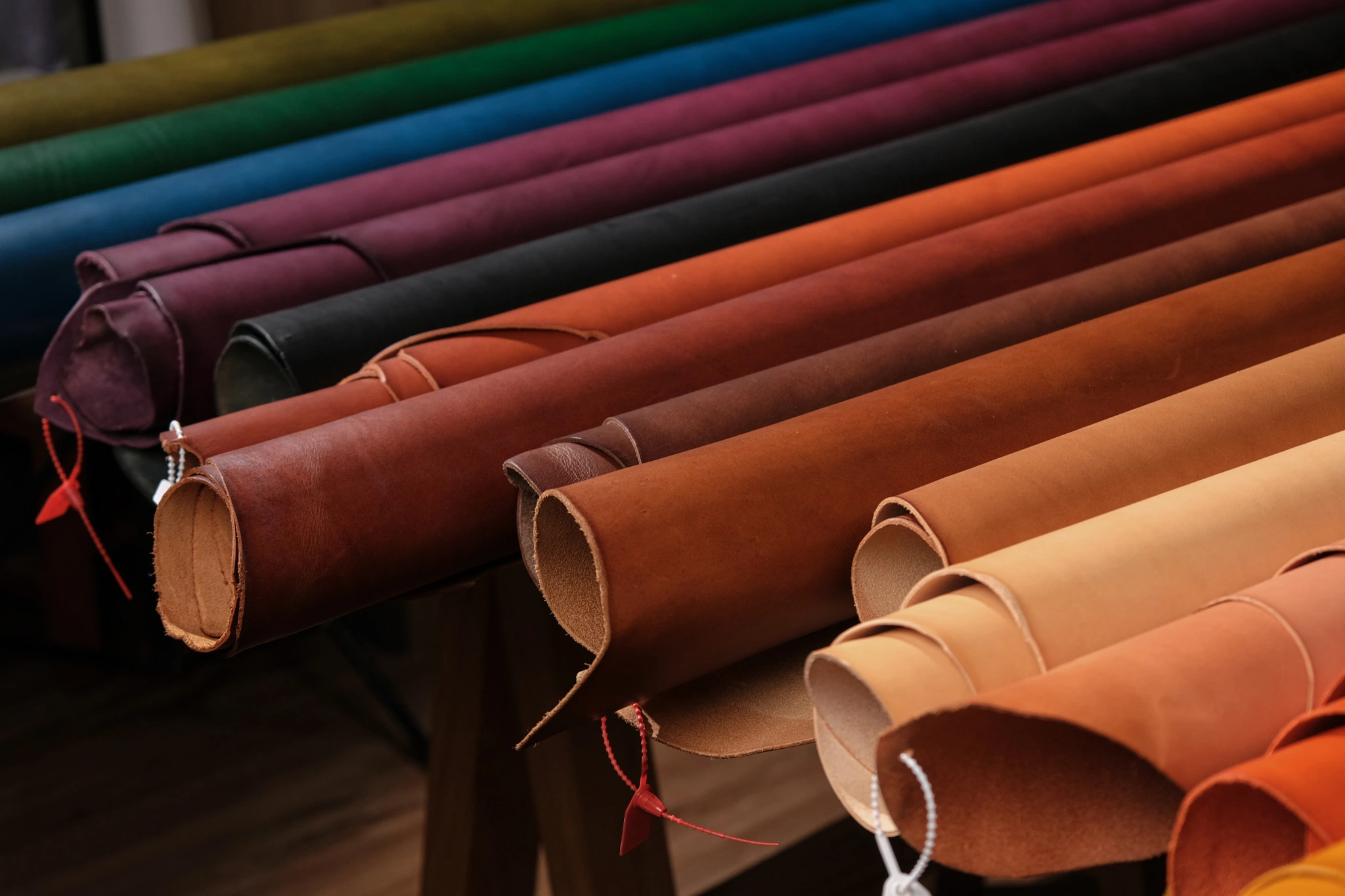
Buttero is a smooth, firm veg-tan cowhide from Tuscany's Walpier tannery, around 2.2 mm. Scent, back vs. belly cutting, scratch repair — check in-stock hides at Kit Leather.
Buttero leather is a smooth-grained, vegetable-tanned cowhide with tight fibers that holds its shape without drooping — the leather line most recommended for leathercraft beginners. Made by Conceria Walpier tannery in Tuscany, Italy, established in 1974. Hides in Kit's warehouse run around 2.2 mm. Cuts clean, burnishes easily, suitable for belts and wallets.
Characteristics of Buttero leather
To the touch, the surface is smooth with no pebble; the tight fibers keep the hide firm in hand rather than flopping over. Fold a corner, and the crease leaves a faint mark before springing back, without any lighter pull-up effect showing like in waxed leathers. The leather is naked with no finish film, so it catches fingernail marks. The dye strikes through the leather rather than sitting on the surface, so cut edges reveal color running through the core, and each hide comes out in a slightly different shade — two hides with the same color name are never completely identical.
What does Buttero leather smell like?
The scent is the giveaway for vegetable-tanned leather before you even look at it: a blend of earthy tannins and dried grass, with a slightly sweet undertone, not the pungent odor of chemicals. This scent comes through strongest when the leather warms up — a hide sitting in a warm room, or a wallet that has been in your trouser pocket all day. Chrome-tanned or film-coated leathers hardly have this smell. The scent fades over the years, but rarely disappears completely.
Why leather crafters favor Buttero leather
- Cuts cleanly without fraying: tight, uniform fibers let the blade track straight for a clean cut edge — beginners can instantly spot where a cut wandered, which soft, pliable leather tends to hide.
- Edges burnish quickly: a few passes with a slicker yield a shine, and edge dye takes evenly because there is no synthetic topcoat — a make-or-break finishing step that is easiest to practice on this leather.
- Holds its shape naturally: thick enough and virtually stretch-free lengthwise, eliminating the need for reinforcers or extra lining layers, which saves a whole technical hurdle when you are starting out.
On the same hide: soft belly, firm back, what to cut where
When you buy by the hide, you get the whole piece of leather, and a Buttero hide is not uniform from edge to edge. The back area, running along the spine, has the tightest fibers and the least stretch. Moving down toward the belly and armpits, the fiber structure loosens up, making the leather softer and stretchy under tension.
- Belts, bag straps, watch straps: cut from the back area, along the direction of the spine — load-bearing parts cut from the belly will stretch out within a few months and misalign the prong holes.
- Wallet outers, journal covers, box walls: should also come from the back area so the piece keeps its structure and burnishes cleanly.
- Inner linings, card slots, small non-load-bearing pieces: save these for the belly area — it's softer and folds easily, and nobody pulls on it anyway.
A quick way to test before chalking your layout: squeeze and fold a few spots. A spot that springs right back is the back; a spot that folds and stays limp is the belly. Lay out all your pattern pieces across the hide, shift the key parts onto the back section, and only then drop your blade.
Drawbacks of Buttero leather
Being smooth and unfinished, scratches show clearly, especially during the first month when the leather is still light — light scuffs fade as the whole hide darkens, but when new, everything shows. Regarding water, only Buttero in Natural easily leaves water marks; other colors handle light splashes quite well if wiped off immediately, just avoid letting water sit for long. And because it holds its shape, Buttero is not suitable for slouchy, soft items — make a slouchy tote with it and it will stand like a barrel; for that, choose tumbled Alaska leather. If you need better water resistance, look at waxed Waxy leather.
Can scratches on Buttero leather be fixed?
Most shallow scratches can be fixed. Because Buttero lacks a topcoat film, a scratch is simply displaced fibers rather than a peeled coating. Rub it with your fingertip or a smooth burnisher in light circular motions; the warmth and natural oils from your skin will guide the fibers back into place. For more stubborn marks, dab a tiny bit of light leather conditioner and keep rubbing — the oiled spot will look darker than the surrounding area for a few days, so test on the flesh side first. Scratches deep enough to form a trench will never fully disappear, but they will blend in as the piece darkens with patina.
How Buttero compares to Pueblo and Hatch
Compared to Pueblo leather (also naked veg-tan): Pueblo has a rustic, scuffed surface that patinas dramatically and fast, but unpredictably; Buttero has a smooth grain and behaves exactly as expected, with no surprises.
Compared to Hatch leather — also from Walpier tannery, also naked veg-tan — in Kit's warehouse both lines run around 2.2 mm, so thickness is not the deciding factor. The difference lies in their application: Kit categorizes Hatch for heavy load-bearing parts and rigid walls, belts, straps, and bases; Buttero is more versatile with a smooth finish, cutting and burnishing with less effort, making it great for wallets, notebook covers, watch straps, and belts alike. At the same thickness, choose based on the item you plan to build.
Buttero patinas slowly and evenly
Being naked with no coating, Buttero gradually darkens from its initial light tone into a richer, warmer shade. The rate is slower and more uniform than Pueblo or oil-stuffed leathers — with no pull-up effect and no napped grain absorbing oils rapidly — so anyone who wants to see leather patina without changing too fast will find Buttero hits the sweet spot. Contact points darken first, so after a year, a wallet reflects the owner's distinct touch.
What looks good made with Buttero leather?
Best suited for items requiring clean structure and crisp edges: belts (the leather doesn't stretch lengthwise, keeping the strap intact and holes aligned), wallets and cardholders (the temper produces tidy edges and corners), watch straps (narrow strips needing tensile strength, where the leather's aroma and color show best), and notebook covers, cases, boxes, and sheaths — rigid walls without requiring extra stiffeners.
Is Buttero leather suitable for beginners?
Yes, it is the most frequently recommended leather for beginners: it cuts cleanly so you immediately spot any stray cuts, edges burnish in just a few strokes, and its firm temper eliminates the need for stiffeners. Its smooth surface won't hide crooked stitching either — which sounds like a drawback, but when learning, seeing your mistakes clearly is a benefit. At 2.2 mm, the only thing you need to prepare is a razor-sharp knife.
Genuine Buttero vs. mislabeled leathers
Buttero is the name of a leather line from Conceria Walpier — a member of the vegetable-tanned leather tanners' association in Tuscany — not a generic term for any smooth veg-tan leather. On the open market, this name often gets slapped onto plenty of other leathers.
Signs to inspect: authentic veg-tan smells of tannins and dried grass, cut edges reveal the dye penetrating the core, and fibers don't fray. Synthetic-coated leathers have an unnaturally uniform shine, a cut edge that shows a core lighter than the surface, and almost no scent. Kit clearly states the tannery for every hide; asking for provenance is standard practice, and if a seller can't answer, walk away.
Storing Buttero leather hides
Uncut hides: roll loosely, never fold — folds in veg-tan leather leave persistent creases that are hard to remove. Store in a dry, ventilated spot, away from direct sunlight since raw leather tans unevenly where exposed to light. Finished goods: wipe dust with a dry, soft cloth, keep away from water during the early months, and apply a very light coat of conditioner when the leather starts feeling dry — heavy oiling in one go leaves the leather muddy and overly darkened.
Selecting & buying Buttero leather at Kit Leather
Kit sells Buttero leather by the hide, measured in pia (30×30 cm) — each hide shows its exact area, thickness, color, and price, so you know in advance how much prime back cut you have to work with. Click View in-stock Buttero hides → to pick your hide, or message via Zalo so Kit can help check which hide offers enough back area for your project.