
What is Alaska leather? Pre-softened milled veg-tan
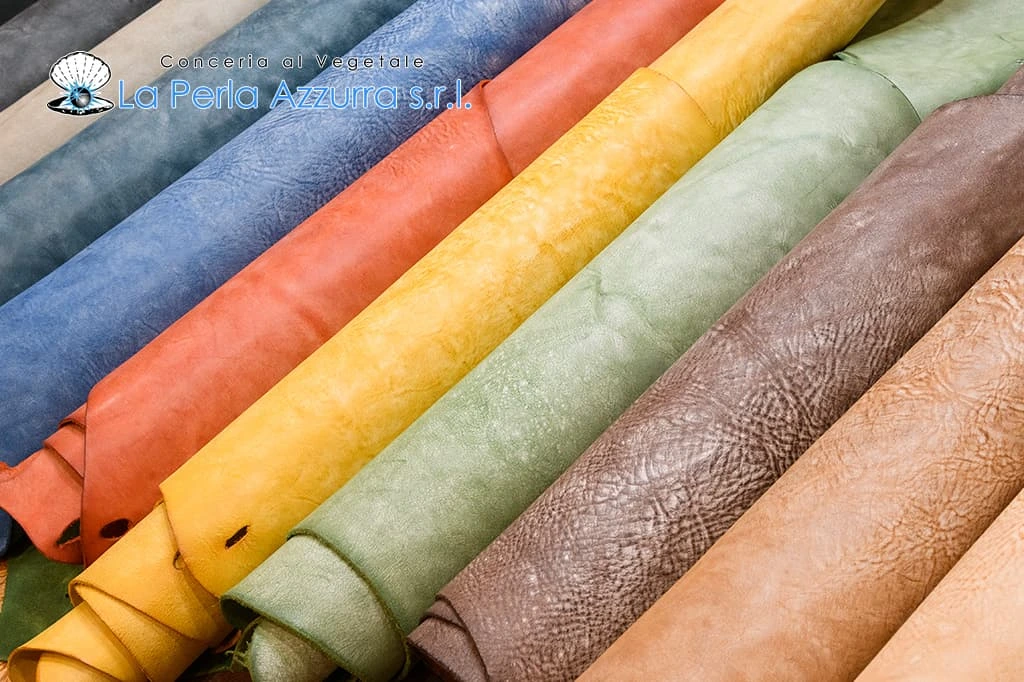
Alaska leather is milled vegetable-tanned cowhide with a soft drape, natural grain, and the ability to darken and develop a patina over time — browse available hides at Kit Leather.
Alaska leather is vegetable-tanned cowhide tumbled to soften, draping in the hand with a raised natural grain. This leather line comes from Conceria La Perla Azzurra tannery (Italy, founded 1967). Alaska is soft right from the start yet still darkens and gains a sheen over time — well-suited for soft-structure bags and wallets.
Identifying characteristics of Alaska leather
Hold up the hide and you will see it drape down in your hand rather than stand firm like veg-tan left as-is. Place a piece of Alaska and a piece of firm leather of the same thickness on the edge of a table, and the Alaska piece bends downward noticeably. Tumbling to soften also raises a natural grain on the surface — irregular, unique from hide to hide, and that grain helps hide light scratches.
Why leather makers favor Alaska leather
- Soft from the start: the hide drapes in hand right when purchased; you do not have to wait months for the leather to break in to get a soft shape.
- Still changes color: as soft as chrome-tanned leather but still uncoated veg-tan, so it gradually darkens and gains a sheen where handled frequently — something chrome-tanned leather does not have.
- Grain that hides scratches: the natural grain raised after tumbling allows fine scratches and light indentations to blend into the grain, requiring less delicate care.
Drawbacks of Alaska leather
The trade-off of being soft from the start is that the leather does not hold its shape: items that need structure such as boxes, hard cases, or crisp-edged cardholders require extra stiff reinforcement, or choosing a leather line that is naturally firm like Buttero leather. Draping leather is also harder to cut — the edges tend to spread as the knife moves, so you must hold it firmly and use a very sharp blade. And because it is still uncoated veg-tan, Alaska still absorbs water; contact with water leaves water rings.
How does Alaska differ from Minerva Box and Buttero?
Compared to Minerva Box leather (also softened veg-tan cowhide with a raised natural grain): Minerva Box sits on an oil-infused base, so folds lighten distinctly (pull-up), whereas Alaska has a calmer surface and its color shifts more gradually. Compared to Buttero leather: Buttero has a smooth grain and firm temper, is easy to cut and edge burnish, making it suitable for beginners; Alaska is soft and draping, suitable for items that need a naturally soft shape right away. If you want folds to stand out as an accent, choose Minerva Box; if you want a more understated surface, choose Alaska.
What is Alaska leather good for?
Best suited for items that need a natural soft drape: bags — the hide drapes so the bag takes on a soft shape immediately, without waiting for the leather to soften over time; soft-structured wallets, pouches, notebook covers — large flat panels suit draping leather well; shoulder straps and soft handles. It can be used for belts and watch straps, but for belts you should add a lining layer so the strap does not flop.
Does Alaska leather hold its shape on its own?
No. The leather is tumbled soft, so it drapes in the hand and does not hold structure on its own. For items that require a rigid shape, lining it with internal reinforcement material does the trick — this is a familiar technique and not a major obstacle. If you prefer not to line it, choosing a leather line that is naturally firm will be faster.
Does Alaska leather develop color like veg-tan?
Yes. Alaska is still uncoated veg-tan leather without any surface film, so it gradually darkens and gains a sheen where handled frequently, just like untouched veg-tan. The advantage is that you get both soft drape and the ability to develop color — something soft chrome-tanned leather cannot provide.
Choosing & buying Alaska leather at Kit Leather
Kit sells Alaska leather by the individual hide — each hide is unique, showing the exact area, thickness, color, and price of that specific hide. To buy Alaska leather, click View in-stock Alaska hides → to select a hide, or message via Zalo for advice on a hide suited to your project.