
What is Hatch leather? 2.2 mm veg-tan leather for belts and bag straps
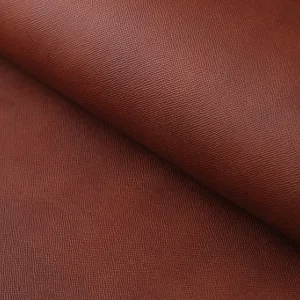
Hatch leather is a 2.2 mm vegetable-tanned cowhide — the thickest in the veg-tan range, suitable for belts, straps, and bases without laminating. Cutting tips and recommended projects at Kit Leather.
Hatch leather is a vegetable-tanned cowhide with a standard thickness of 2.2 mm — the thickest in the veg-tan range in stock. This leather line comes from Conceria Walpier tannery (Italy, founded in 1974). At that thickness, the leather is completely self-supporting, making belts, bag straps, and bases without needing to laminate layers.
Characteristics of Hatch leather
Holding it, it feels noticeably heavier and firmer in hand than standard veg-tan leather — 2.2 mm is a thickness you feel immediately. The hide stands upright; bending an edge takes force rather than drooping in your hand. The surface is left natural with no finish coating, so it picks up fingernail marks and will darken over time with use, just like all veg-tan leathers.
Why leather makers favor Hatch leather
- Cut a single piece and you are done: at 2.2 mm, load-bearing parts are self-supporting without laminating two layers — no worries about delamination over time, no need to burnish two edges into one, and it cuts leather usage in half.
- Load-bearing and shape retention: belts, straps, bases, shoulder straps — components that need to hold their shape and handle tension without sagging can all be made at this thickness.
- Still develops patina: the surface is natural, so it darkens over time; after a year or two, a belt develops its own tone, with the area around frequently used pin holes growing darker than the rest.
Drawbacks of Hatch leather
At 2.2 mm, a dull blade will not cut cleanly but will tear — the edge frays and the cut wanders off the line, so your knife must be razor-sharp. Pricking holes and stitching are also much heavier work than with 1.2 mm leather, your awl must be long enough to pierce all the way through, and edge burnishing takes time because the thick edge requires multiple passes. Hatch also cannot be folded in multiple layers: a multi-pocket wallet made of Hatch will be overly bulky and unusable. If you need a thinner 1.2 mm leather for multi-layer folding, check out Sully Tuning leather from Alran.
How does Hatch differ from Buttero and Taiga?
Compared to Buttero leather (same tannery, Conceria Walpier, both veg-tan with a firm surface): at Kit's warehouse, both leather lines are around 2.2 mm, so thickness is not the deciding factor — choose Hatch for belts, straps, and bases; choose Buttero for wallets, cardholders, and items requiring folding or fine cuts. Compared to Taiga leather (also 2.2 mm thick, also holds its structure): Taiga is chrome-tanned calfskin, so it does not develop patina, whereas Hatch is natural veg-tan and darkens over time.
What is Hatch leather good for?
Best suited for load-bearing parts and rigid walls: belts (the leather does not stretch lengthwise, so the strap will not elongate after a few months), bag straps and shoulder straps (bearing the entire weight), bases and bag bottoms (needing structural support), and sheaths and cases requiring rigid walls. Avoid using it for multi-pocket wallets or items requiring thin folds.
How thick is Hatch leather, and can it be used for belts?
It has a standard thickness of 2.2 mm, and making belts is where it fits best. At this thickness, the strap is self-supporting, withstands tension without flopping, and being an unfinished veg-tan leather, it does not stretch lengthwise — the strap does not stretch out, and prong holes do not deform after a few months. Cut a single strip and you are done, with no need to laminate two layers like thinner leathers.
Is Hatch leather difficult to cut?
Yes, harder than thinner leathers — but primarily due to the knife. At 2.2 mm, a dull knife will tear rather than cut, leaving a frayed edge and straying off the line. With a razor-sharp blade, Hatch cuts smoothly. If you are a beginner and not yet skilled at sharpening knives, practice on thinner leather first or choose Buttero from the same tannery.
Choosing & buying Hatch leather at Kit Leather
Kit sells Hatch leather by the hide — each hide is unique, showing the exact area, thickness, color, and price of that specific hide. To buy Hatch leather, click View in-stock Hatch hides → to select a hide, or message us on Zalo for advice on the right hide for your current project.