
What is Dollaro leather? Embossed pebbled veg-tan — hides scratches and develops patina
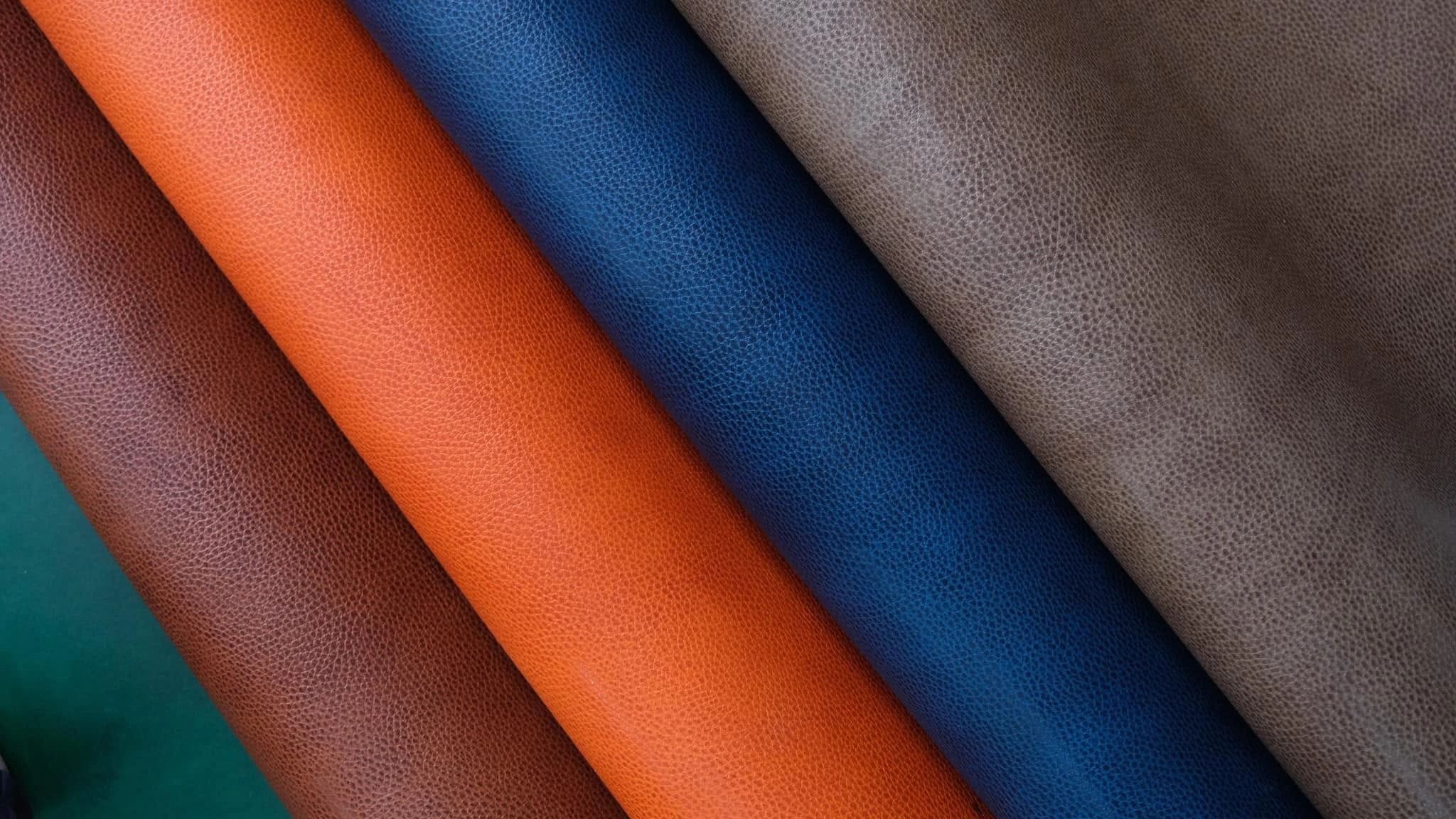
Dollaro leather is vegetable-tanned cowhide with an embossed round pebble grain — hiding scratches while developing patina like smooth veg-tan. How to identify it, Caviar/Pueblo comparisons, and recommended projects at Kit Leather.
Dollaro leather is vegetable-tanned cowhide embossed with an even round pebbled grain on an unfinished base — it both hides scratches and develops a patina over time like smooth veg-tan. Dollaro comes from the Conceria Walpier tannery (Italy, founded in 1974). Large hides yield long pieces, suitable for bags and large wallets.
Identifying characteristics of Dollaro leather
Looking closely, you see tiny round pebbles, completely uniform across the hide — the hallmark of plate-embossed grain, distinctly different from drum-milled grain that varies in size. The surface feels evenly textured to the touch, yet the leather base remains warm and takes fingernail marks, because beneath the embossed grain is unfinished veg-tan leather, not film-coated leather.
Why leather crafters favor Dollaro leather
- Both hides scratches and develops patina: the embossed grain conceals daily wear and scuffs like embossed chrome-tanned leather, while the unfinished veg-tan base still gradually darkens and develops a sheen where touched frequently — two traits you usually have to choose between.
- Uniform grain makes cutting easy: cutting anywhere on the hide yields the same result without having to avoid irregular grain areas, and two adjacent joined pieces do not look mismatched.
- Suitable for batch production: items of the same pattern look consistent, so customers ordering from photos will not experience mismatched expectations.
Drawbacks of Dollaro leather
Because the base is unfinished, water spotting still occurs: water droplets leave marks, though the embossed grain makes spots less noticeable than on smooth leather. The embossed grain also flattens under heat and pressure — burnishing edges or ironing hot onto the grain will flatten it in those spots with no recovery, so take care during edge burnishing. Patina develops more subtly than on smooth surfaces, and pieces that are too small lose the character of the grain. If you want very good scratch resistance, virtually unchanging color, and no patina, look at chrome-tanned Epsom leather.
How does Dollaro differ from Caviar and Pueblo?
Compared to Caviar leather (embossed chrome-tanned calfskin): Caviar hides scratches completely and retains its color virtually for life but develops no patina; Dollaro hides scratches slightly less, but develops patina in return. Compared to Pueblo leather (also unfinished veg-tan): Pueblo produces the strongest patina but has a rough surface where scratches show clearly; Dollaro has an embossed grain that conceals scratches, so everyday use needs less careful handling. Dollaro sits right between these two.
What looks good made with Dollaro leather?
It works best for everyday items subject to bumps and friction: bags (large hides allow cutting straps and bodies from the same hide), large wallets (the grain hides scratches, so carrying a wallet in a back pocket is fine), cases and covers (items subjected to constant rubbing where you still want a patina). Avoid pattern pieces that are too small, as the grain will lose its character.
Can Dollaro leather both hide scratches and develop a patina?
Yes, that is the defining strength of this leather line. The embossed grain conceals scuffs and micro-scratches like embossed chrome-tanned leather; meanwhile, the unfinished veg-tan base still gradually darkens and develops a sheen in frequently touched spots. Usually you have to choose between the two — Dollaro gives you both, though the patina develops more subtly than on smooth leather.
Does Dollaro leather absorb water?
Yes. Because the base is unfinished veg-tan, water dropping onto it still absorbs and leaves spots, just like Pueblo. The difference is that the embossed grain makes water marks less noticeable than on smooth leather, but it is not waterproof — in the early stages, you should still avoid getting the leather wet.
Selecting & buying Dollaro leather at Kit Leather
Kit sells Dollaro leather by the hide — each hide is unique, showing the exact area, thickness, color, and price for that specific hide. To buy Dollaro leather, click See in-stock Dollaro hides → to select a hide, or message via Zalo for advice on a hide suited to the project you are making.