
What is Caviar leather? Uniform round-pebbled calfskin that hides scratches well
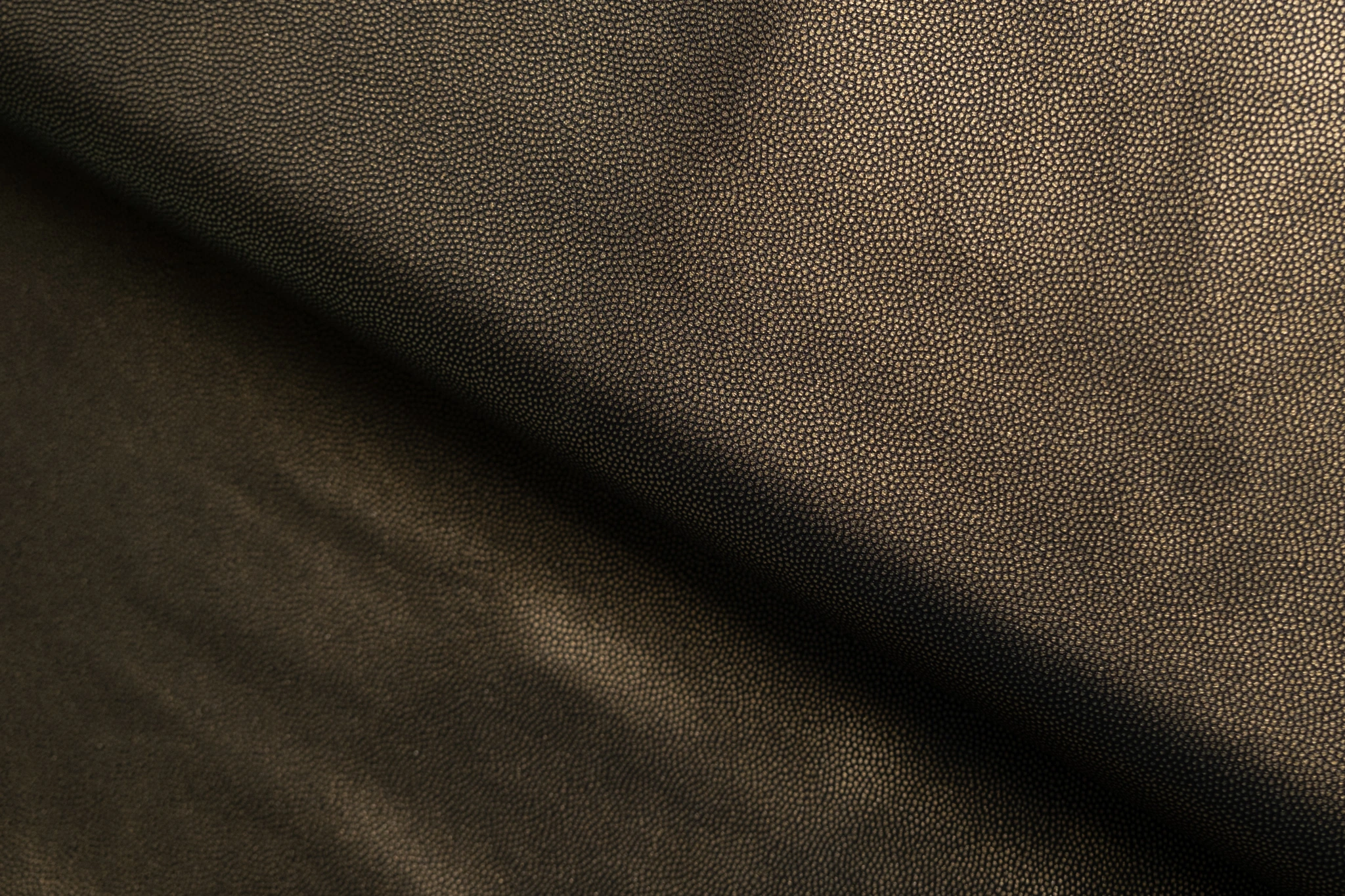
Caviar leather is chrome-tanned calfskin embossed with uniform round pebbles, hides scratches exceptionally well, and has an even grain that makes batch cutting easy. How to identify it, drawbacks, comparisons with Epsom/Togo, and suitable projects — browse available hides at Kit Leather.
Caviar leather is chrome-tanned calfskin with a surface embossed with tiny, perfectly uniform round grains — resembling sturgeon caviar, which is why people in the trade call it "caviar." This is embossed leather, distinct from natural-grain leather, commonly sourced from high-end French calf tanneries like Haas. The raised grain hides scratches very well, and the uniform pattern means you do not have to align grain direction during batch cutting — the reason this leather line is chosen for wallets, small bags, and watch straps.
Identifying characteristics of Caviar leather
To the touch, the surface feels slightly textured and consistent, yet still smooth, not rough. The round grain has a uniform size across the entire hide — this is the easiest sign to distinguish it from other embossed grains. The leather has moderate temper, neither floppy nor as stiff as vegetable-tanned leather.
Why leathercrafters favor Caviar leather
- Hides scratches exceptionally well: The raised grain conceals pressure marks and minor scuffs — items look new even after long use, without needing babying.
- Easy for batch cutting: The uniform grain means you do not have to align grain direction, making yield calculation fast and minimizing waste.
- Holds shape well and looks refined: Well-suited for items that need to maintain structure and a neat appearance.
Drawbacks of Caviar leather
Because it is embossed, Caviar leather lacks the rustic look and color-shifting depth (patina) of veg-tan leather. Edges are also harder to burnish smoothly compared to smooth leather, requiring a bit more work. Hot creasing flattens the grain in that area permanently, so take care during edge finishing and creasing. If you prefer a natural, rustic look, consider Pueblo leather or vegetable-tanned leather lines.
How does Caviar differ from smooth leather and Epsom leather?
Compared to smooth leather: Caviar has better surface durability and hides scratches much better, though it is less sleek and clean-looking. Compared to Epsom leather (also an embossed calfskin): Epsom has an angular, firm rectangular grain; Caviar has round grains that are softer on the eyes. As for Togo leather (natural pebbled grain): Togo has a softer drape, while Caviar is more structured. Which one to choose depends on the style of the item you are making.
What is Caviar leather suitable for?
Best suited for items that need to retain their shape and show little wear over time: wallets, cardholders, small bags, watch straps, and notebook covers. This is also a leather commonly seen on designer bags, so finished goods tend to look upscale.
Is Caviar leather durable?
Yes. The raised grain acts as a natural shield: light scratches, scuffs, and pressure marks are all concealed, keeping the surface looking new for a long time. Only deep cuts through the grain layer remain visible. A Caviar item used for a year rubbing against pockets, tables, and keys will still retain a good appearance.
Does Caviar leather develop a patina?
No. Caviar is chrome-tanned, so it retains its color for virtually its entire lifespan, without developing a patina like vegetable-tanned leather. If you want calfskin that patinas to a honey tone, look into Barenia leather; if you want both grain and patina, consider Dollaro cowhide.
Choosing & buying Caviar leather at Kit Leather
Kit sells Caviar leather by the hide — each hide is unique, allowing you to see the exact area, thickness, color, and price of that specific hide. To buy Caviar leather, click View in-stock Caviar hides → to select a hide, or message us on Zalo for advice on choosing the right hide for the item you are making.