
What is Togo leather? Pronounced pebbled calfskin with a soft drape that stays looking new
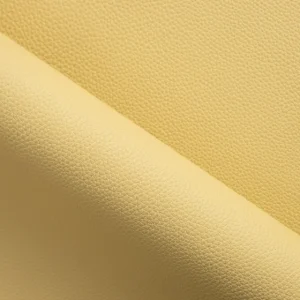
Togo (Odessa Calf) is chrome-tanned calfskin with a raised pebbled grain, supple drape, and hides scratches very well. Why it is expensive, how it differs from Clemence, caring for hides — see hides at Kit Leather.
Togo leather—the commercial name on the hide is Odessa Calf—is a chrome-tanned calfskin with a distinct raised pebbled grain, soft and drapey. This leather line is made by Weinheimer, a German calf tannery founded in 1849. This is the softest calfskin that still has a raised grain; the grain hides scratches very well, making it suitable for soft-structure bags and everyday items.
Identifying characteristics of Togo leather
Look at it at an angle under light, not straight down from above: Togo's pebbled grain is raised high, dimensional, and catches the light, so the leather surface looks lively and textured rather than flat. Lift the hide and it yields to your hand; release it and it drapes down rather than standing firm like Epsom or Box Calf. That pair of signs—high raised grain combined with soft drape—is the fastest way to recognize Togo among calfskins. The hide also feels lighter in hand than its substantial appearance suggests.
Are Hermès "Togo" and "Togo / Odessa Calf" sold by the hide the same thing?
Not quite, and this is where the most confusion arises when you search for Togo online.
Almost every article about Togo talks about Hermès bags: that this fashion house introduced a leather named Togo in 1997, and that this is the leather used for most Birkin and Kelly bags. Kit records that part exactly as those sources write, because Kit cannot inspect the records of a fashion house. But there is one thing Kit is certain of: Hermès does not retail Togo leather by the hide to makers; the group's tannery sells leather to Hermès itself and other luxury brands. "Togo" in those articles is their proprietary material name, not a leather you can order.
What leather makers can buy is a chrome-tanned calf hide with that exact raised pebbled grain, and on the hide it bears the tannery's commercial name. At Kit, that name is Odessa Calf, from Weinheimer, Germany. So when you read that "Togo is a leather of French origin," that is inferred from Hermès being a French fashion house; whereas the hide in Kit's warehouse comes from Germany. Two different naming systems—do not expect them to match.
Why leather makers favor Togo leather
- Hides scratches very well: the raised grain breaks up reflections so scratches blend into the background instead of showing as bright lines—a bag used for a whole year, rubbing against tables, cars, and zippers, still looks almost new.
- Soft drape creates beautiful shapes: the hide drapes naturally, so soft-structure bags collapse naturally with soft folds and feel pleasant to hold.
- Folds compactly without bulk: the leather is soft, so folded wallets do not bulk up at the fold, making it suitable for pocket wallets that need to be both soft and scratch-concealing.
Why is Togo leather more expensive than regular calfskin?
Two reasons lie in the process, not in the name. First, tanning takes significantly longer than for conventional calfskin lines: the hide goes through more cycles in vats and tanning drums, softening while retaining its fibers. Second, the graining step shrinks the leather, so a hide after developing grain is smaller than it was before—the tannery loses surface area, and that loss is built into the price.
You will see some Vietnamese articles citing very specific numbers: how many percent it shrinks, how many hours it tans. Kit does not cite them. Three sources tell the same story yet disagree on both numbers and units—one writes "3–7 times", another writes "3–7 weeks"—the telltale sign of a mistranslation copied repeatedly. The mechanism is correct; the numbers Kit has no basis to provide you.
Disadvantages of Togo leather
The trade-off for soft drape is that it does not hold its shape on its own: any item requiring structure must be lined with a stiffener, along with the whole chain of work that follows—choosing reinforcement stiffness, gluing evenly to prevent delamination, finishing two-layer edges—and adding another point that could separate after a few years. If you want to skip all those steps, look at Epsom leather.
Three more points during crafting. Drapey hides shift under the knife, so hold pattern templates down firmly and use a very sharp knife; do not rely on one long dragging cut. Hot creasing flattens the grain, and once flattened it does not bounce back—on a high raised grain, flattened spots are very noticeable, so be careful during edge finishing and creasing. And details that are too small lose the grain effect: a piece containing only a few grain nodules looks like bumpy leather rather than an intentional grain. If you need fine grain for small items, look at Caviar leather.
How does Togo differ from Epsom and Evercolor?
Epsom is embossed leather, while Togo has a natural grain that shrinks during drum tumbling; all three differ in stiffness and surface texture. Compared to Epsom leather: Epsom is the most structured, holding a boxy shape without lining, suitable for structured items; Togo has a soft drape, so it requires reinforcement if structure is desired, but in return it shapes soft bags beautifully. Compared to Evercolor leather: Evercolor also has a soft drape, but its grain is very fine and its surface is matte with no shine, suitable for pieces that call for an understated look with little texture; Togo has the most prominent raised grain, so it conceals scratches more effectively.
How does Togo differ from Taurillon Clemence?
This is the pair most easily confused, because both are chrome-tanned leathers with a raised pebbled grain. Placing two hides side by side lets you tell them apart in five seconds, but when working from a pattern, the two types require two different approaches.
- Grain size: Togo is smaller · Clemence is larger.
- Grain prominence: Togo is raised high, dimensional · Clemence is flatter, as if lightly pressed.
- Hide weight: Togo is lighter · Clemence feels heavier in hand.
- Softness: both are soft, Clemence is one notch softer.
- Shape retention: Togo retains most of its original shape · Clemence slouches over time with use.
- Part size: Togo can be cut for both medium and small items · Clemence has a larger grain, so it should be cut in large panels.
In short: Togo is the neater, firmer version; Clemence is the heftier, more drapey version. Read in detail about each type in what is Taurillon Clemence leather, or see the complete comparison in the article Difference between Togo and Taurillon Clemence leather.
What happens when Togo leather gets wet?
It behaves much more calmly than veg-tan leather. Togo is chrome-tanned and has a surface finish, so water does not soak in immediately to form water stains like veg-tan leather—for drizzle or water splashes, just dab it with a soft cloth, do not rub.
However, "not staining instantly" does not mean "no problem." Standing water left for a long time can still leave marks on light colors, and the raised grain holds water in the valleys longer than a smooth surface, so you must blot into the valleys as well. If it gets very wet, stuff the item with paper to maintain its shape, then let it dry at room temperature: do not blow-dry with heat, do not leave it in the sun, and do not hold it near a heater. High heat causes leather to shrink and stiffen—that is real damage, very different from a water mark.
Storing Togo hides in a maker's workshop
This section covers uncut hides, something almost nobody writes about because other articles only discuss how to care for designer bags.
Roll loosely, grain side facing out, do not fold. A fold on raised grain leaves a flattened crease, and flattened grain does not bounce back. Do not place heavy objects or stack other hides on the area you intend to cut exterior panels from—weight over time also flattens the grain.
Store in a dry, well-ventilated space away from direct sunlight. Wrap in fabric or uncolored paper; do not seal tightly in plastic bags as moisture condenses inside. Hides hung by one corner for a long time will stretch at the stress point, so if hanging, clamp evenly, or simply keep them rolled.
Togo color range and why the color does not change
Togo is chrome-dyed leather with a colored finish, so its color range is significantly broader than veg-tan leather—from neutral tones to bold colors. The stock in Kit's warehouse changes by lot, and there is an even more important point: the color you choose today is the color you have for a lifetime of use. Chrome-tanned leather does not darken or develop a patina sheen like veg-tan leather; what changes over time is its softness and shape, not the color.
When choosing colors, there is a practical point: on light colors, water marks and unfinished cut edges show more; on dark colors, shadows in the grain valleys give the leather surface more visual depth. Photos are never completely color-accurate, so view photos of the actual hide on the Togo hides page.
What Togo leather is best suited for
It is best suited for high-use items that take wear and tear yet must maintain their exterior appearance: soft-structure bags (grain hides scratches, hide drapes into a natural shape), wallets, especially pocket wallets (soft so they fold compactly, grain conceals pressure marks and scuffs), and everyday handbags. For items requiring crisp corners and rigid structure, Togo is not in its element—it can be done, but requires an added reinforcement layer. Leave very small details to fine-grained leather lines.
Selecting & buying Togo leather at Kit Leather
Kit sells Togo / Odessa Calf leather by the individual hide—each hide is unique, showing the exact area, thickness, color, and price of that specific hide, so you can calculate your blanks before purchasing. To buy Togo leather, click View available Togo hides → to select a hide, or message via Zalo so Kit can check which hide suits the item you are making.