
What is Taurillon Clemence leather? Large, flat pebbled grain and why to cut large panels
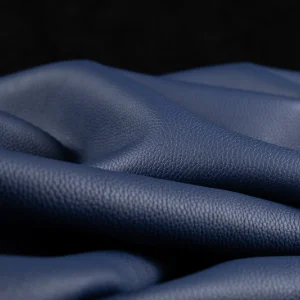
Taurillon Clemence is chrome-tanned cowhide with a large, flat pebbled grain, heavy in hand yet supple with a soft drape. Differentiating it from Togo, why you must cut large panels — see in-stock hides at Kit Leather.
Taurillon Clemence leather is chrome-tanned cowhide with a large, flat, round pebbled grain, heavy in the hand yet softly draping. The hides Kit sells are young bull (taurillon, around 12 months) from the Rémy Carriat tannery (France, founded in 1927). With its large grain, this leather line is made for cutting large panels: slouchy bags, bag flaps — not small leather goods.
Identifying characteristics of Taurillon Clemence leather
Look at an angle under light, do not look straight down from above: the round pebbled grain is larger than small-grain leather lines but flat, spread out as if lightly pressed rather than raised into peaks. When picked up, the hide feels heavy in the hand; when let go, it drapes right down, without any stiffness left to stand on its own.
Those two signs must go together. If the grain is large and raised high, and the hide is lighter, you are holding a different leather line.
Are Clemence, Taurillon Clemence, and Veau Taurillon Clémence the same thing?
Yes, those three names refer to the same thing. This is the easiest point of confusion when researching this leather line, so let's clarify three layers:
- The same leather: "Clemence", "Taurillon Clemence", and "Veau Taurillon Clémence" are three variations in length of the name for the same leather line, not three different leathers.
- "Taurillon" is a family name, not a specific name: there is another leather line that also carries the Taurillon name — Taurillon Novillo, released in 2015 — but its natural grain is very fine, smoother to the touch than both Togo and Clemence, and because the surface is smooth, it shows scratches more easily. When you see the word "Taurillon", keep reading the word after it.
- The animal is described differently across sources: articles on designer bags describe it as calfskin, young bull, or cowhide — no two sources match. Kit only speaks with certainty about what Kit holds in hand: the hides in stock are young bull (taurillon, around 12 months) from Rémy Carriat.
Two details Kit intentionally leaves blank: the launch year — three sources give three milestones a whole decade apart, and Kit won't choose for you; and a few other names people online attach to this leather line — if unverified, Kit will not mention them as fact.
How is Taurillon Clemence leather different from Togo leather?
This is the most searched question around this leather line, and with good reason: both are chrome-tanned, both have a natural raised pebbled grain, both are soft — placed side by side, they are very easy to confuse. Here is a comparison based on criteria someone about to cut needs to know:
- Grain size: Clemence is larger · Togo is smaller.
- Grain prominence: Togo is raised high, dimensional, catches light clearly · Clemence is flatter, the leather surface looks flatter and more subdued.
- Hide weight: Clemence is heavier, you can tell as soon as you pick it up.
- Softness: both are soft, but Clemence is a step softer.
- Shape retention: Togo retains most of its original shape · Clemence gradually sags over time with use.
- Tannery: Togo hides at Kit bear the trade name Odessa Calf, from Weinheimer (Germany); Clemence hides are from Rémy Carriat (France). Two tanneries, two naming systems.
There are also two points where sources contradict each other; Kit addresses them directly rather than picking a side at random:
- Which one is more scratch-resistant: some sources rank Clemence above Togo, others only praise Togo. Kit does not make a final call. What is more certain: the difference between the two is much smaller than the difference between pebbled leather and smooth leather.
- How small a detail Clemence can be used for: some sources mention even watch straps using this leather. For the Rémy Carriat hides in Kit's stock, the recommendation remains not to — the reason is in the section right below.
To compare both leathers closely by each criterion, read the dedicated article How Togo and Taurillon Clemence leathers differ.
Why must Taurillon Clemence leather be cut into large panels?
Because its pebbled grain is large. A small part can only fit two or three pebbles, and two or three pebbles do not create any effect — the leather surface just looks bumpy. To see the grain, the piece must be wide enough for dozens of pebbles to spread out: bag bodies, bag flaps, notebook cover exteriors.
There is another detail only those who have cut a whole hide know: the grain size varies across different areas on the same hide. This is the grain of a real hide, not a printed pattern that is completely uniform. The consequence: two pieces joined next to each other must be cut close together on the hide, otherwise the finished piece will show two different grain patterns, looking as if assembled from two different leathers. A good habit is to lay out all pattern templates on the hide, shift them until satisfied, and only then drop the blade.
Drawbacks of Taurillon Clemence leather
Four things to know before paying for a hide:
- Not suitable for small leather goods: cardholders, watch straps, name tags — the few pebbles get lost, looking unimpressive. If you want grain on small items, look at Caviar leather or Epsom leather.
- Does not hold shape on its own, and sags further later: when purchased, the hide is already softly draping, so items needing structure must be lined. What few places mention is that items made with Clemence lose shape further over time in use — a few years later, the bag is softer and more collapsed than on day one. If you consider that part of its beauty, that is fine; if you need a bag that stays boxy after many years, this is not the leather for you.
- Overstuffing accelerates sagging: only one source mentions this, so Kit notes it as an observation rather than a rule. It also aligns with common sense for soft leather — areas under heavy tension stretch first.
- Hot creasing flattens the grain, and once flattened it does not bounce back: be careful during edge finishing and creasing. On an already flat grain base, further flattened areas stand out even more.
Does Taurillon Clemence leather develop patina?
No. This is worth explaining carefully, because you might read somewhere that Clemence "has a matte surface so it develops a deep patina over time." Kit does not agree with that description, and here is why.
Patina — leather gradually darkening, turning translucent, and developing a sheen — is a characteristic of vegetable-tanned leather: the surface is left bare without a coating film, allowing hand oils, sweat, and sunlight to penetrate the leather fibers and change its color based on how you use it. Clemence is chrome-tanned and has a topcoat finish; the very thing that makes its color durable and easy to wipe down is what blocks patina. The color you buy is the color you keep throughout the life of the item.
What truly changes over time with Clemence is softness and shape: the hide drapes more, the item slouches down, and handled areas wear smoother. If you want to watch leather change color with the user's hands, you need to turn to the vegetable-tanned group, such as Pueblo leather.
Bag styles suitable for Taurillon Clemence leather
In short: the larger the item and the more it accepts a soft shape, the more suitable it is.
- Large slouchy bags, shoulder bags, briefcases: wide enough for the grain to spread out, with enough volume so the weight of the hide feels substantial in hand rather than burdensome.
- Bag flaps, notebook cover exteriors, very large wallets: wide, flat panels where the grain can fully spread out.
- Not suitable: items needing sharp square edges and long-term rigid structure. You can line them, but lining won't hold forever because the hide is soft by nature.
If you need a reference point to visualize: familiar slouchy bag styles like the Picotin, Lindy, Evelyne are the exact category of shapes this type of leather showcases well — soft body, no square edges, letting the leather surface and drape speak for themselves. Kit mentions these shape names for easy visualization, not to imply that the hides in stock share a source with any fashion house.
What happens when Taurillon Clemence leather encounters water?
It can withstand momentary splashes of water, but cannot withstand soaking. Because it is chrome-tanned with a finish coat, a few raindrops resting on the pebbled grain will not penetrate immediately; simply blot them dry with a soft cloth.
What you must avoid is leaving the leather wet for a long time and then drying it incorrectly. If wet, blot immediately and air dry naturally in a well-ventilated area — no blow dryers, no sun drying, no holding near heat sources. Heat shrinks and hardens leather, and on pebbled grain, heat extracts an extra cost: the grain flattens and does not puff back up. Wet leather also stretches more easily, so do not overstuff or stretch the item before it has dried completely.
Storing Taurillon Clemence hides in the workshop
Unused hides: roll loosely with the grain facing outward, do not fold — folding on a pebbled grain leaves marks that are hard to fix, and the softer the hide, the more easily creases leave impressions. Roll comfortably by hand, without tightening into a narrow tube. Store in a cool, dry place away from sunlight, and do not place heavy objects on top.
This hide is heavy, so if hung, support the full width rather than clipping one corner — hanging from a single point over time will stretch that spot. Being chrome-tanned, it does not need regular oil conditioning like veg-tan leather; wiping off dust with a dry, soft cloth is sufficient, and for light colors, watch out for dust that tends to settle in the crevices between pebbles.
Selecting & buying Taurillon Clemence leather at Kit Leather
Kit sells Taurillon Clemence leather by the hide — each hide is an individual skin with its own area, color, and price displayed, so you can calculate beforehand whether it has enough yield for the largest piece in your pattern. To buy, click View in-stock Taurillon Clemence hides → to choose a hide, or message via Zalo so Kit can help check which hide has grain areas suitable for the item you are making.