
What is Nubuck leather? How it differs from suede, and why you must spray it before use
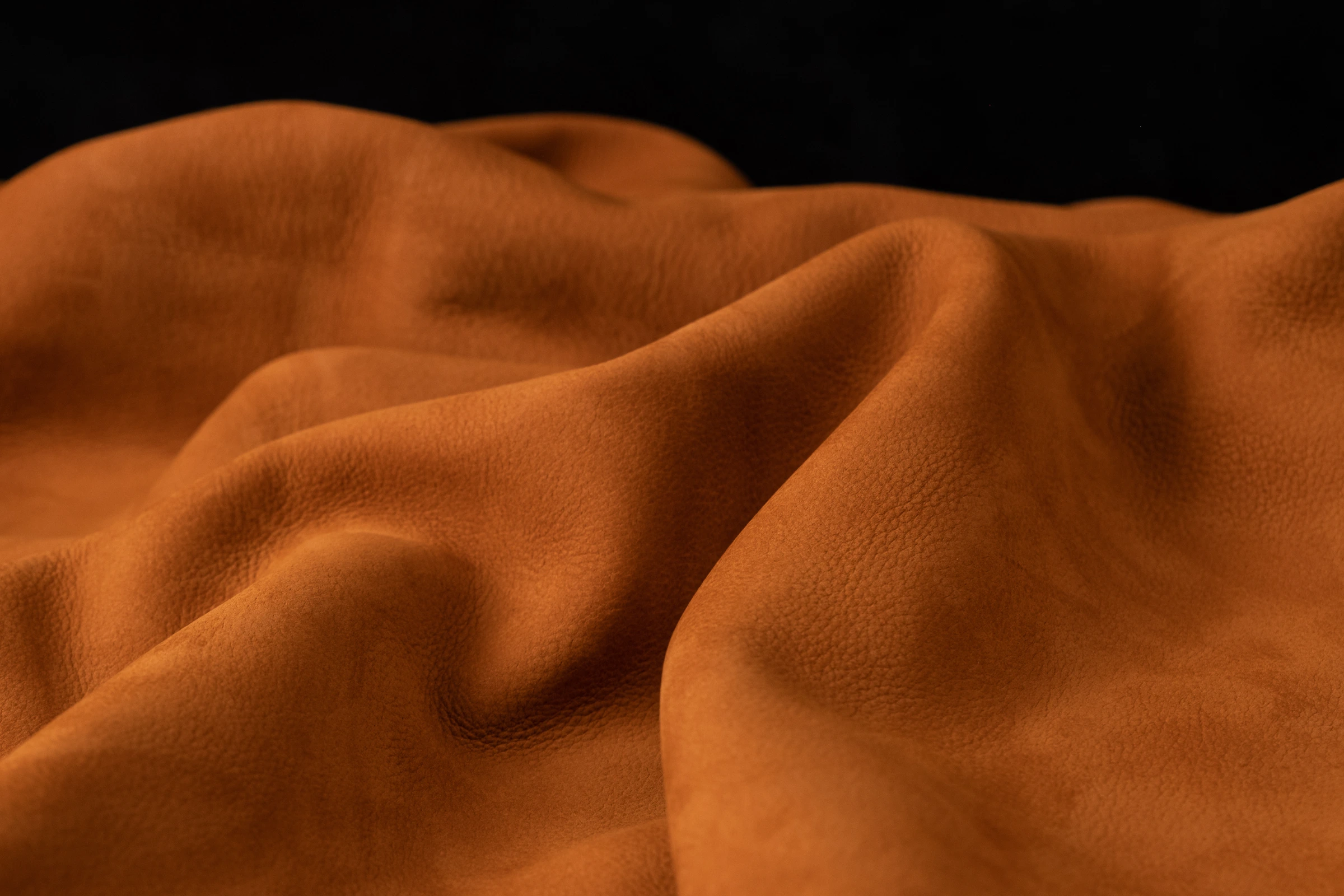
Nubuck leather is cowhide sanded on the grain side to create a fine nap, stronger than suede. Kit's hides are unfinished: spray them, cut along the nap direction — view in-stock hides at Kit Leather.
Nubuck is chrome-tanned cowhide sanded on the grain side to produce a short, fine nap that feels like velvet. Sanded from the outside—the grain side of the hide—nubuck is sturdier than suede, well suited for shoes and bags. The line at Kit comes from tannery Rémy Carriat (France, 1927); according to the specifications of Carriat's Gochoki code, the sanded surface has no protective film but is already treated to resist water and oil during dyeing.
Identifying characteristics of nubuck leather
To the touch, it has a short, even, and fine nap; the leather feels warm rather than cold like glossy leather. The most reliable indicator is the nap direction: rubbing back and forth in the same spot produces two distinct light and dark shades. A short, uniform nap is also how you distinguish it from suede, which has a longer and looser nap. With no protective film, the leather picks up fingernail marks, and dust gets trapped in the nap.
Does nubuck leather absorb water?
Search for this online and you will find five different answers: absorbs immediately; takes on water more easily than smooth leather; only darkens temporarily and recovers; not easy to penetrate; and even more water-resistant than suede. None of them are making it up—most are talking about nubuck on finished products, where the leather surface was given a protective coating at the factory, so water beads up and leaves no trace if wiped in time.
With untreated nubuck, the answer is definitive: water droplets soak right in and leave dark marks. The mark fades as the leather dries completely, but if the water spreads unevenly, the edge of the watermark remains visible. As for the Carriat line at Kit, according to the specifications of Carriat's Gochoki code, the leather is already treated for water and oil resistance during dyeing, so it handles water droplets well; if wiped in time, it leaves no marks.
The claim that it is "more water-resistant than suede" also has its logic: the grain-side fibers are short and tight, so the nap holds its shape when wet, whereas the loose flesh side of suede mats down when wet.
Comparing nubuck, suede, and Velvet
These three names are often used interchangeably because they look similar in photos. They truly are similar: all three are genuine leather sanded to create a nap, all have a nap direction so pieces must be cut in the same direction, and all collect dirt and absorb water more easily than smooth leather. The difference lies in where the nap comes from.
- Nubuck is sanded from the outside, the grain side of the hide: the nap is short, fine, and even; the leather is sturdy and holds up under stress.
- Suede is sanded from the flesh side: the nap is longer and looser; the leather is soft but weaker, prone to fraying from repeated friction.
- Velvet, from the same tannery Rémy Carriat, is also cowhide sanded to a nap, but thinner and drapier than nubuck—suitable for slouchy bags, while nubuck handles load-bearing tasks.
If you need a napped surface for an item that bears weight, choose nubuck; if you need a hide that drapes naturally, go with Velvet. If you like leather from the same tannery without the upkeep of a napped surface, look at Taurillon Clemence leather—pebbled grain, far easier to live with.
Why leather makers favor nubuck leather
- Hard-to-replace surface: The fine nap gives a warm, subdued look that glossy leather cannot offer—one glance at the finished piece reveals the material.
- Sturdier than suede: Sanded from the grain side, it retains the strength of the outside, handling load-bearing items like shoes.
- You control the finish: With no film on the leather surface, you can leave it natural or apply an additional protective spray for items frequently used outdoors.
Disadvantages of nubuck leather
Nubuck is unforgiving, and most mistakes made on it cannot be undone:
- Glue spills permanently mat the nap—once glue penetrates the base of the nap, it cannot be cleaned off. Apply glue neatly, or mask the edges before applying.
- Rubbing with heat mats and glazes the nap into a shiny streak distinctly different from the rest, a common trap during edge finishing and creasing.
- Dust gets trapped in the nap, most noticeable on lighter-colored hides.
- Does not develop patina because it is chrome-tanned; the color stays almost unchanged throughout its lifespan. If you want to watch leather darken, check out Pueblo leather.
- Fades if exposed to prolonged sunlight: With no protective film, sun exposure hits the dye directly; an item left by a window for a few months will fade compared to covered areas.
If you want a smooth surface with no need for protective sprays or checking nap directions, Mozart leather is a shortcut.
Cutting nubuck: nap direction decides before the blade drops
This is where beginners pay the steepest price. Because the nap shifts shade depending on the direction it is brushed, two adjacent panels cut in opposite directions will look like two different colors—appearing as two different leathers, and usually only showing once the piece is fully stitched.
A habit worth forming: determine the nap direction as soon as you unroll the hide, draw directional arrows with chalk on the flesh side, and align all pattern templates in the same direction before cutting. Do not invert patterns to save leather—whatever scrap you save will not compensate for a bag panel with mismatched color.
Does nubuck need a protective spray, and when should you spray it?
Although according to the specifications of Carriat's Gochoki code, the leather already has built-in protection from the dyeing stage, you should still apply an additional water-repellent spray before the item goes into use; do not wait until it gets dirty. Once dirt penetrates the nap, a protective coat will only lock the stain inside.
A note on sequencing: the coating also resists glue. If you spray the whole hide before assembly, mask off glue margins, or save the spraying step until after gluing and stitching are finished. The coating wears down over time and needs reapplying; the telltale sign is when water no longer beads up and soaks in immediately.
How to handle nubuck leather when dirty or wet
Dry dirt: Wait until completely dry, then use a soft-bristle brush to gently brush in one direction so the nap stands back up and dust falls out. Scrubbing hard frays the nap, and once frayed it does not recover. For tougher stains, mix warm water with a little mild soap, dampen a microfiber cloth slightly rather than soaking it, wipe in one direction, and let it dry naturally. Always test any solution on a small corner first.
When wet: Blot immediately with a dry towel, pressing down to draw out moisture without rubbing. Then air dry in a well-ventilated spot, away from sunlight and heat sources like hair dryers—heat hardens and shrinks leather, and heat-matted nap cannot be salvaged. Once completely dry, brush again to raise the nap and reapply the protective spray.
Storing unused hides
Shoe articles don't cover this, but anyone buying by the hide needs to know: never fold an uncut nubuck hide. Creases leave long, matted lines, and if one lands in the center of the hide, the best cutting area is ruined.
Two safe methods: drape it over a smooth round rod so the leather hangs freely, or roll it loosely into a large-diameter roll with the napped side facing out—rolling it the opposite way compresses and mats the nap. Do not stack heavy objects on the hide. Store in a dry, well-ventilated place out of direct sunlight, wrapped in soft fabric or paper rather than sealed plastic bags.
Is nubuck genuine leather?
It is genuine leather: solid cowhide sanded on the grain side, not synthetic leather or bonded scrap leather. What triggers doubt is simply its velvety appearance, looking more like fabric than leather.
An on-the-spot test: brush against the nap. Real sanded leather visibly changes shade where rubbed—appearing darker or sheenier—then returns to normal when brushed back down. Faux nubuck fabric usually stays one flat shade, or shifts very little in an unnaturally uniform way. Also check the cut edge: genuine leather reveals a fibrous, spongy edge with no backing fabric underneath.
Why is it called nubuck
The name most likely comes from "new buck": buckskin is fine-grained deerskin, and when cowhide was sanded on the grain side to mimic that surface from a more plentiful source, the name was born.
What is nubuck leather best suited for?
Best suited for items that showcase seamless leather panels and do not catch rain: shoes (the napped surface holds its shape, leather sturdy enough to bear weight), bags (large cowhides allow cutting seamless panels), jackets (lightweight, draping with the body), desk covers and notebook covers. Nubuck is also a familiar material for upholstery—chair covers, headboard panels—because the velvet-like nap softens large expanses without harsh glare. Items subjected to daily rain and sun are best reconsidered.
Choosing & buying nubuck leather at Kit Leather
Kit sells nubuck leather by the hide, priced per pia (30×30 cm)—each hide shows its own specific area, color, and price. The leather has a sanded surface without a protective film. Click Browse in-stock nubuck hides → to select a hide, or message via Zalo so Kit can help check whether a hide size accommodates the patterns you are cutting.