
What is EPI leather? Parallel ridged grain and why cutting direction matters
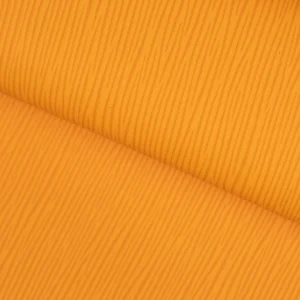
EPI leather is chrome-tanned calfskin embossed with parallel ridges. Its directional grain requires attention when cutting and yields more waste; color stays stable — browse available hides at Kit Leather.
EPI leather is chrome-tanned calfskin embossed with parallel ridges running in uniform straight lines. This leather line comes from tannery Haas — a French tannery founded in 1842, specializing in calfskin. What sets EPI apart from all other embossed leathers is that the grain is directional, making it suitable for wallets, cardholders, and notebook covers that need a neat surface.
How to recognize EPI leather
You can see raised parallel ridges running uniformly in a single direction across the entire hide surface — not round pebbles or squares like other embossed lines. To the touch, the surface feels slightly textured along the ridges. Rotating the hide by 90 degrees makes the surface look completely different; that is the telltale sign of a directional grain.
Why leather crafters favor EPI leather
- A rhythmic, directional surface: straight ridges create a neat, intentional feel — completely different from the natural look of pebbled grain.
- Retains its original color: being chrome-tanned, it does not darken or shift tones — customers receive the piece looking just like the photo, and a year later it remains the same.
- Continuous ridges: even on small pieces like card slots, the grain remains legible because the ridges run continuously without interruption.
Drawbacks of EPI leather
The main factor to weigh is that it uses more leather than symmetrical grain lines: because the grain is directional, you cannot freely rotate pattern pieces to nest them onto the hide. Applying heat and pressure flattens the grain, and on a ridged grain, flattened spots are very noticeable because they break the continuous straight line — you must be careful when edge finishing and creasing. Ridged grain is also worse at hiding scratches than pebbled grain: scratches running across the ridges will cut through them and remain visible. If you want maximum scratch hiding, Caviar leather is a safer choice. And like all chrome-tanned leathers, EPI does not develop a patina.
How does EPI differ from Caviar and Epsom?
All three are embossed chrome-tanned calfskin, differing in their grain pattern. Compared to Caviar leather (round pebbled grain) and Epsom leather (crosshatched grain): the grain on these two lines is symmetrical, so rotating the hide in any direction looks the same, requiring no directional alignment during batch cutting; meanwhile, EPI's ridged grain is directional, so you must decide on the grain direction before cutting, which consumes more leather. In return, EPI offers a rhythmic surface that pebbled grains lack. If you produce in volume and want things as simple as possible, the other two lines are easier.
What works best with EPI leather?
It works best for items with flat surfaces broad enough for the running ridges to show: wallets (ridged grain on a wallet exterior looks very neat), cardholders (the continuous ridges remain legible even on small panels), and notebook covers and sleeves (flat surfaces highlight the rhythm of the grain).
Why must you mind the grain direction when cutting EPI leather?
Because EPI's ridged grain is directional — running in a single direction, unlike symmetrical pebbled or crosshatched grains. If pattern pieces on the same item are cut with misaligned grain directions, the finished piece immediately looks disjointed even with flawless stitching, because the human eye catches directional misalignment very easily. You should mark the grain direction with chalk on the flesh side as soon as you unroll the hide, then decide whether the grain runs vertically or horizontally and keep it consistent across all parts — this mistake cannot be fixed once cut.
Does EPI leather develop a patina?
No. EPI is chrome-tanned, so it retains its color throughout almost its entire lifespan, without darkening or developing a sheen like veg-tan leather. If you want calfskin that patinas to a honey tone, look into Barenia leather.
Selecting & buying EPI leather at Kit Leather
Kit sells EPI leather by the hide — each hide is unique, showing the exact area, thickness, color, and price of that specific hide. To buy EPI leather, click View in-stock EPI hides → to select a hide, or message via Zalo for advice on a hide suited to the project you are making.