
Which leather should you choose for watch straps?
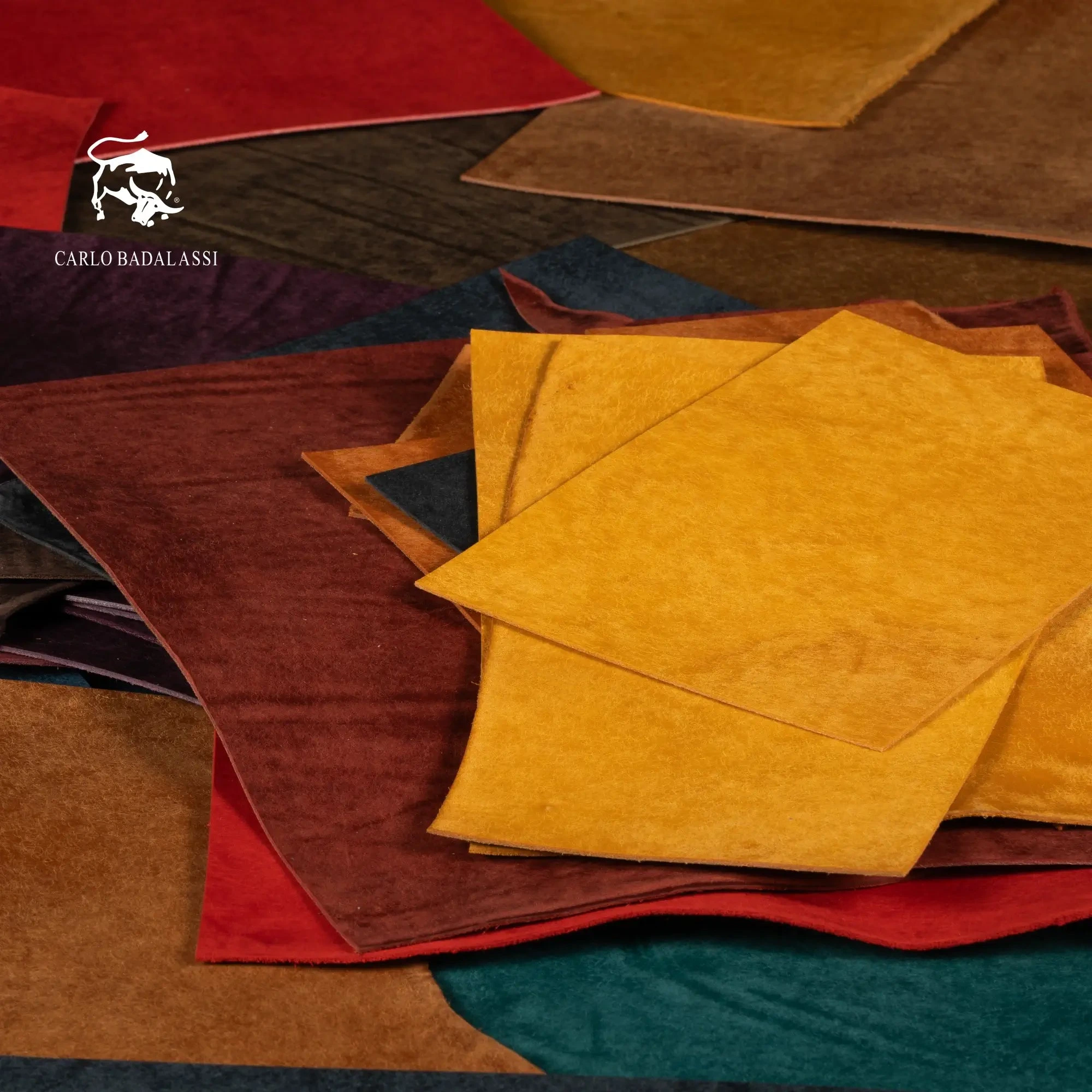
Watch straps endure sweat and bend at the exact same spot. Choose veg-tan to develop patina, chrome-tanned to retain color, goatskin for thin straps — and which leather lines to avoid. See hides at Kit Leather.
A watch strap is a small leather item that takes a lot of sweat and bends at the exact same spot throughout its lifespan. So choosing leather for it boils down to two questions: what thickness fits your wrist, and do you want the strap to develop a patina from your wear or keep its original color? Knowing those two things tells you which page to open.
What a watch strap demands from a hide
This is what sellers of finished straps don't tell you, because they sell the strap, not handle the hide. Four things:
- You only need a small piece. A strap set is two narrow strips, so you can use sections of a hide not large enough for bigger projects—scraps left after cutting wallets, strips too short for bag straps.
- It bends at the exact same spot throughout its lifespan. A wallet folds every day, but the crease is spread across a wider area; a strap always creases at a single point right near the watch lugs. The leather must be tough at the fold—tight fibers matter more than thickness.
- Sits right against human skin, so sweat is the enemy. Straps are ruined not by rain, but by sweat day in, day out, soaking through from the inner face outward. The inner face is what you don't see, and it is the face that fails first.
- The edges are fully exposed. On a wallet, an imperfect edge can hide inside a fold; on a strap, the two edges sit right in front of people's eyes. If edge burnishing isn't clean, everything else is meaningless.
Where you cut also matters: take strips from the back area, cut parallel to the spine—straps cut from the belly will stretch out within a few months.
If you want the strap to develop a patina from your wear
Choose veg-tan leather. A watch strap darkens faster than anything else in your wardrobe: it rests against your skin for hours every day.
- Buttero leather — smooth surface, tight fibers, darkens slowly and evenly. Cuts cleanly, edges burnish up in a few passes: the most forgiving for your first strap set. View in-stock Buttero hides.
- Pueblo leather — rustic scuffed surface, transforms the most dramatically in stock: within a few weeks, the spots where your fingers frequently rest are already shinier than the rest. View in-stock Pueblo hides.
To be upfront about the trade-off: patina goes hand in hand with absorbing sweat and fingerprints. Both are unfinished without a coating, so for a watch strap, line the inner face—so sweat gets absorbed by the lining first, rather than soaking straight into the leather you are waiting to see patina.
If you want the strap to keep its color with minimal care
Choose grained chrome-tanned leather. The color stays consistent almost throughout its lifespan, and the grain hides scratches—wearing it daily while rubbing against desks and sleeves, it still looks neat.
- Epsom leather — even cross-hatch grain, the stiffest among calfskins; makes a neat, structured strap. View in-stock Epsom hides.
- Togo leather — also a pebbled grain, but softer and with more drape than Epsom, wrapping comfortably around the wrist. View in-stock Togo hides.
- Caviar leather — tiny, perfectly uniform round pebbles; with such uniform grain, however many sets you cut, they all turn out identical. View in-stock Caviar hides.
In return: these three lines do not develop a patina, and edges must be finished with multiple coats of edge paint rather than burnishing bare leather to a shine. Another rule true for all grained leather: creasing with heat flattens the grain, and once flattened it does not bounce back.
If you want a thin, lightweight strap that doesn't feel bulky on the wrist
Choose goatskin. Goatskin fibers are tightly interlocked, making it thin yet tough—exactly what the fold of a strap needs.
- Chevre Sully leather — and Kit didn't just label it this way: on Alran tannery's product list, Sully is categorized under leathers for watch straps, alongside leather goods and small leather goods. This leather line also has the widest color selection of hides in Kit's inventory. View in-stock Chevre Sully hides.
- Sully Tuning leather — same Alran goatskin base, standard thickness of 1.2 mm: knowing the thickness beforehand lets you calculate the total strap thickness when layering, without having to skive. View in-stock Sully Tuning hides.
Note on blanks: a single layer of goatskin is thin, so straps are usually layered twofold or padded for sufficient thickness and structure.
If you want a strap with distinctive character, recognizable at a glance
Ostrich leather: genuine raised quills with center pits—something embossed leather cannot replicate. On a narrow strip, the line of quills running down the strap is very photogenic, and because a strap is small, you don't need to buy much to get that look.
There is just one thing to watch: quills are concentrated along the spine, densest in the mid-back and tapering smaller toward the neck. You should position your pattern on the hide and shift it so the strap strip falls on a good-looking quill area before cutting. View in-stock ostrich hides.
A few lines Kit advises against for watch straps
When selling an entire warehouse of leather, it is also good to point out where you shouldn't spend money.
- Hatch leather and Taiga leather — 2.2 mm, too thick. That thickness is meant for belts, bag handles, and bag bottoms; on the wrist, the strap feels bulky, and the fold right at the watch lugs has to fight against rigid leather.
- Taurillon Clemence leather — large grain. A narrow strip will only catch a few pebbles, looking uneven rather than creating an intentional effect. If you want pebbled grain on a small item, Togo or Caviar is more suitable.
- Velvet leather and Nubuck leather — napped surface. The napped surface easily attracts dirt, and the nap mats where it rests against the wrist, making it very hard to keep clean.
So why does Buttero work when it's also around 2.2 mm? Because it is smooth veg-tan leather: it skives cleanly, then softens up with wear after a few weeks. Hatch comes from the same tannery but is stiffer. Taiga is chrome-tanned, so it won't soften to your wrist over time, and skiving or creasing over its embossed grain flattens the pattern.
What should you use to line the inner face?
Thin goatskin. It is tough at the fold, stacks without adding bulk, and takes the sweat so the outer leather doesn't have to—if something degrades, it's the replaceable part. One hide of Chevre Sully covers the lining for all the strap types mentioned above.
If you want a colored lining, look at Chèvre Sully Fluo—the same goatskin quality in vibrant shades. The inner face of the strap is only seen by the owner; a pop of color there feels tasteful rather than flashy.
How much leather do you need for a watch strap?
Very little, and that is why buying by the hide works so well for this item. Kit calculates area by the pia, where one pia is 30×30 cm. A strap set is two narrow strips that together measure less than a handspan—even including the lining and cutting waste, it stays within roughly one pia.
So what you need to look for when selecting a hide isn't the biggest hide, but one with an intact back area in the exact color you want. Excess leather can go into card holders or lining for future strap sets.
How long can you wear a leather strap before replacing it?
There is no single number, and Kit won't give a number just for convenience. What decides it is your sweat, the climate, whether you wear one strap continuously or rotate several, and whether the strap is lined.
Signs are more reliable. It is time to replace it when the inner face gets sticky, darkens where it touches the wrist, and develops an odor; when the fold right at the lugs cracks into lines; and when the pin holes stretch into ovals. To extend a strap's lifespan, rotate between two or three straps, take the watch off during heavy activity, and don't fasten it too tightly.
How do you handle a leather strap damaged by sweat?
To be honest from the start: once sweat has soaked into unfinished leather, it cannot be drawn out. What you can do is slow it down.
Wipe it down with a damp cloth wrung out thoroughly, wiping the entire surface evenly rather than dabbing only at wet spots—spot-cleaning unfinished leather leaves water rings. Then let it dry naturally in an airy spot: no hair dryers, no direct sun, no heating, because heat shrinks and stiffens leather, making the fold brittle.
The real cure lies at the time of making: line the inner face, and cut a second strap set from the same hide right away. A watch strap is a consumable item; seeing it that way will save you headaches.
Selecting and buying leather for watch straps at Kit Leather
Kit sells leather by the hide, and for small items like watch straps, this offers the greatest advantage: you can pick a hide that is just right, in the exact color, with an intact back section, instead of receiving a pre-cut scrap selected by someone else.
If you want a strap that patinas, look at Buttero or Pueblo. If you want a strap that keeps its color: Epsom, Togo, Caviar. If you want a thin, lightweight strap: Chevre Sully and Sully Tuning. Not sure what to choose? Message via Zalo with a photo of the watch and your wrist size, and Kit will check the hides for you.